Korte broek
The speaker asserts Pakistan’s constitution is riddled with hypocrisy and requires amendment to fully align with Islamic principles. He proposes a constitutional amendment – specifically the Nineteenth Amendment – to prioritize Islamic tenets over all other constitutional provisions. He criticizes the existing legal framework for superficially acknowledging Islam while failing to implement its requirements. The speaker laments the lack of political will to enact these changes, despite having prepared a draft amendment and shared it with relevant parties. He expresses deep concern about the future of Pakistan if these issues remain unaddressed, predicting potential societal collapse.

92
The observance of fasting on the 9th and 10th of Muharram is a recommended practice, not obligatory. This practice originated when the Prophet Muhammad learned that the Jews of Medina fasted on the 10th of Muharram to commemorate their deliverance from Pharaoh. The Prophet stated that the Muslims have a greater right to Moses than the Jews, and thus instructed his companions to fast on the 9th and 10th of Muharram instead, to differentiate their practice. This was done even before Ramadan fasting was made obligatory. The intention was to establish a distinct practice, fasting for two days instead of one.
74
This lecture emphasizes living one's life solely for the pleasure of God. True faith manifests in loving for God's sake, hating what displeases Him, giving in His name, and withholding for His sake. This complete devotion, as described in a hadith, signifies the fulfillment of one's faith and earns divine security. The speaker urges listeners to seek God’s help in achieving this level of dedication.
58
This lecture addresses the common misconception that individuals can directly improve the circumstances of others. It clarifies that provision and hardship are ultimately determined by God's will and wisdom. The speaker emphasizes that humans should focus on their own efforts and trust in God's plan, recognizing that He expands or restricts sustenance according to His knowledge and judgment. God is fully aware of the needs of His servants and acts in their best interest.
51
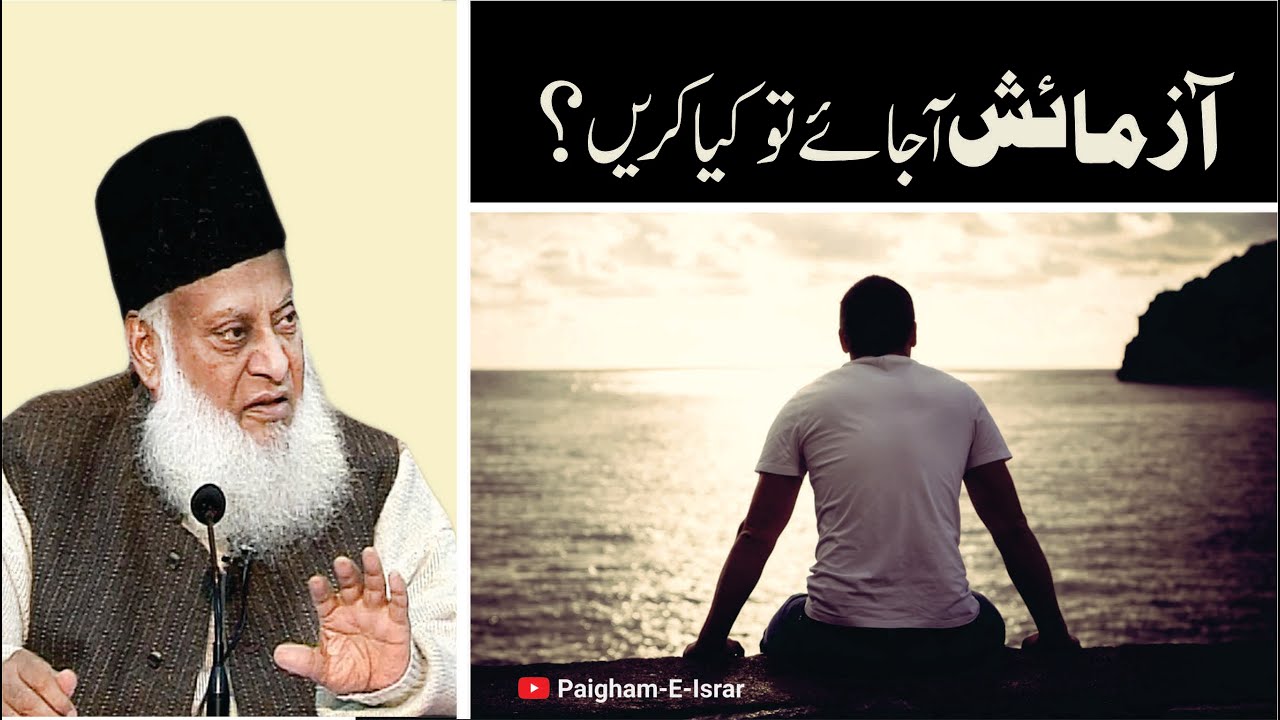
Dr. Israr Ahmad explains that all trials and tribulations, whether on a large scale like natural disasters or personal misfortunes, are part of Allah’s preordained plan, recorded in His knowledge. He emphasizes that nothing happens by chance; everything occurs with Allah’s permission and is within His complete knowledge of past, present, and future. Acceptance of this truth, rather than grief or blame, is the key to peace and resilience. The speaker illustrates this with the story of a Sufi saint who accepted being struck by a stone as a decree from Allah. True understanding means recognizing Allah’s hand in all events and trusting in His wisdom, even when experiencing hardship.
97

True piety isn't demonstrated through outward acts of worship directed towards the east or west. Genuine goodness lies in sincere belief in God, the Day of Judgment, angels, scriptures, and prophets. Actions must be performed solely for the pleasure of God and the reward in the afterlife. Deeds motivated by worldly gain are mere transactions, not acts of piety. A firm faith in God and the afterlife is essential for any act to be considered truly virtuous; otherwise, it is a superficial facade, like gold plating over brass, easily stripped away. Actions lacking sincere intention are temporary and hold no lasting value.
49
