短裤
This lecture discusses the proper timing for ending the daily fast (iftar) according to different Islamic schools of thought. It clarifies the disagreement between Shia and Sunni perspectives, with Shia scholars advocating for waiting until complete darkness and Sunni scholars linking it to sunset. The discussion extends to the importance of avoiding extremes – neither rushing the pre-dawn meal (sehri) nor excessively delaying iftar. It emphasizes adhering to established timings and completing the fast correctly, without unnecessary hardship or innovation. The lecture stresses the need for practical application of religious principles and cautions against unnecessary complications in observing religious rituals.

75
This discourse emphasizes that truthfulness stems from aligning statements with the principles of the Quran. Justice is achieved through Quranic rulings, and reward is assured for those who act upon its teachings. The Quran itself guides, and those who call others to it are guaranteed guidance. The speaker prays for divine assistance in remaining steadfast on the straight path for themselves and the audience.
89
Islam is a complete way of life and cannot accommodate elements from other systems. The speaker argues against the integration of modern democracy and socialism into Islam, asserting that Islam possesses its own inherent democratic and socialist principles rooted in its teachings and jurisprudence. He points to the presence of the term ‘jumhoor’ (the public) in Islamic texts as evidence of Islam’s democratic foundation, and the concept of ‘shirkat’ (partnership) as its socialist basis. Islam’s system is comprehensive and self-sufficient, rejecting external ideological grafting.
44
This lecture explains that the essence of all divine commands converges on the single concept of *ibadat* (worship). The speaker references the initial verses of Surah Nuh, where Prophet Noah is instructed to warn his people. The core message is to worship God, practice *taqwa* (righteousness), and obey the prophet. This highlights worship as the fundamental purpose of human existence and the means to avert divine punishment. The lecture emphasizes that true worship encompasses both adherence to divine commands and a sincere devotion to God.
58
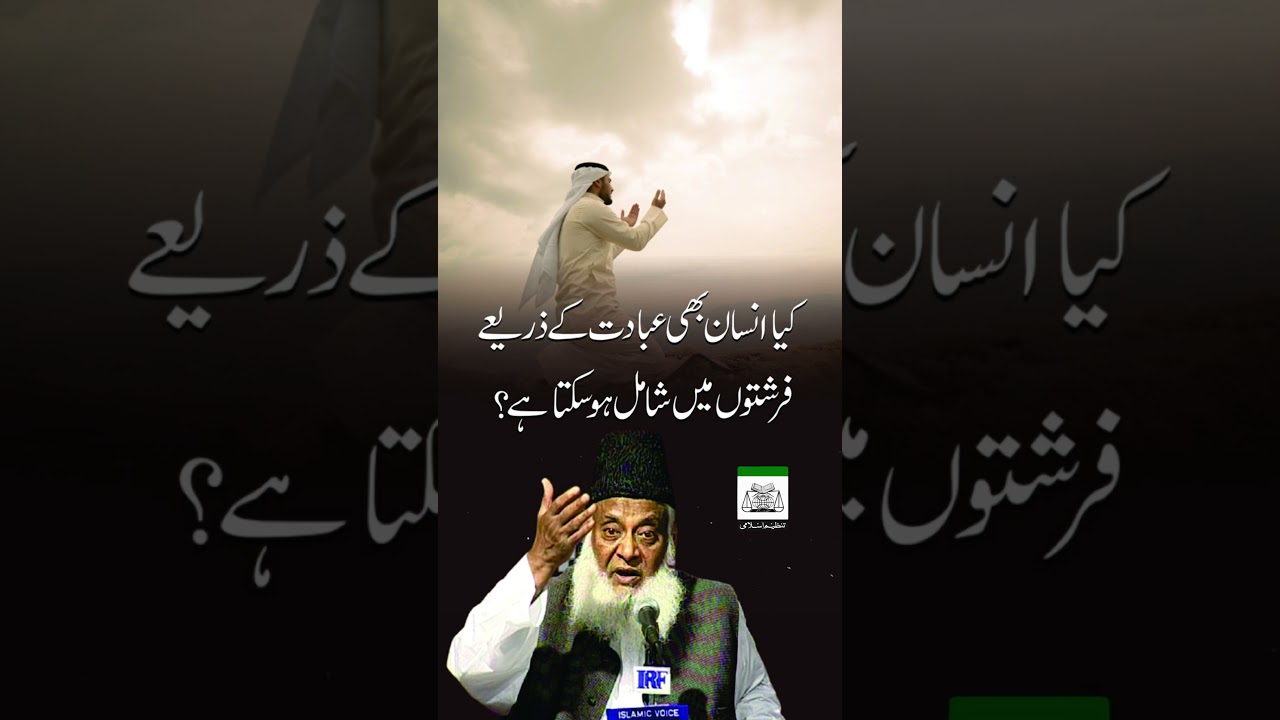
The lecture discusses the possibility of a human attaining a status akin to angels through sincere worship, referencing the case of Azazil. It explains that pious individuals, known as Wali Allah, after death, have their souls integrated into the lower ranks of angels—not the highest—to serve as divine agents. This integration occurs by divine selection and is supported by the example of Shah Ali Allah, whose scholarly stature and spiritual position serve as evidence.
50
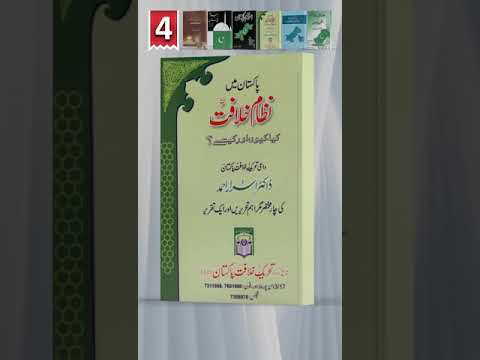
This collection of lectures by Dr. Israr Ahmad addresses critical questions about Pakistan’s history, ideology, and future. Topics include the legacy of the founder of Tanzeem-e-Islami, the viability of a caliphate system, the historical and political context of Islam in Pakistan, the factors contributing to Pakistan’s instability, and the reality of the Pakistan Ideology. The set also features Dr. Ahmad's analysis of Pakistan's political landscape from 1977 to 1987. Available for ₨1200 (originally ₨1900) from Maktaba Khuddam-ul-Quran, Lahore. Home delivery is free with cash on delivery. Order online at www.maktaba.com.pk or WhatsApp at 0301-1115348.
56
