Shorts

This lecture explores the historical context of the Prophet Muhammad’s era, emphasizing that the triumph of Islam was not merely a historical event but a continuing process. It highlights the sacrifices made by those who strove to establish the principles of Islam, contrasting their success with the misfortune of those who remained indifferent. The speaker asserts that the fulfillment of the Prophet's mission will continue, even if not by the current generation, as it is a divine decree. The lecture stresses the importance of dedicating oneself to this purpose, recognizing it as the path to true success in this life and the hereafter.

102

Dr. Israr Ahmad explains the significance of *suhoor* (pre-dawn meal) in Islam. He highlights that *suhoor* distinguishes Muslim fasting from that of the Jews. Fasting begins at dawn, not sunrise, allowing time for the meal. He cautions against excessive strictness in observing the timing of *suhoor*, referencing the Prophet Muhammad’s emphasis on ease and avoiding unnecessary hardship in religious observance. The practice should be approached with balance and moderation, prioritizing accessibility and avoiding overly rigorous interpretations.
66
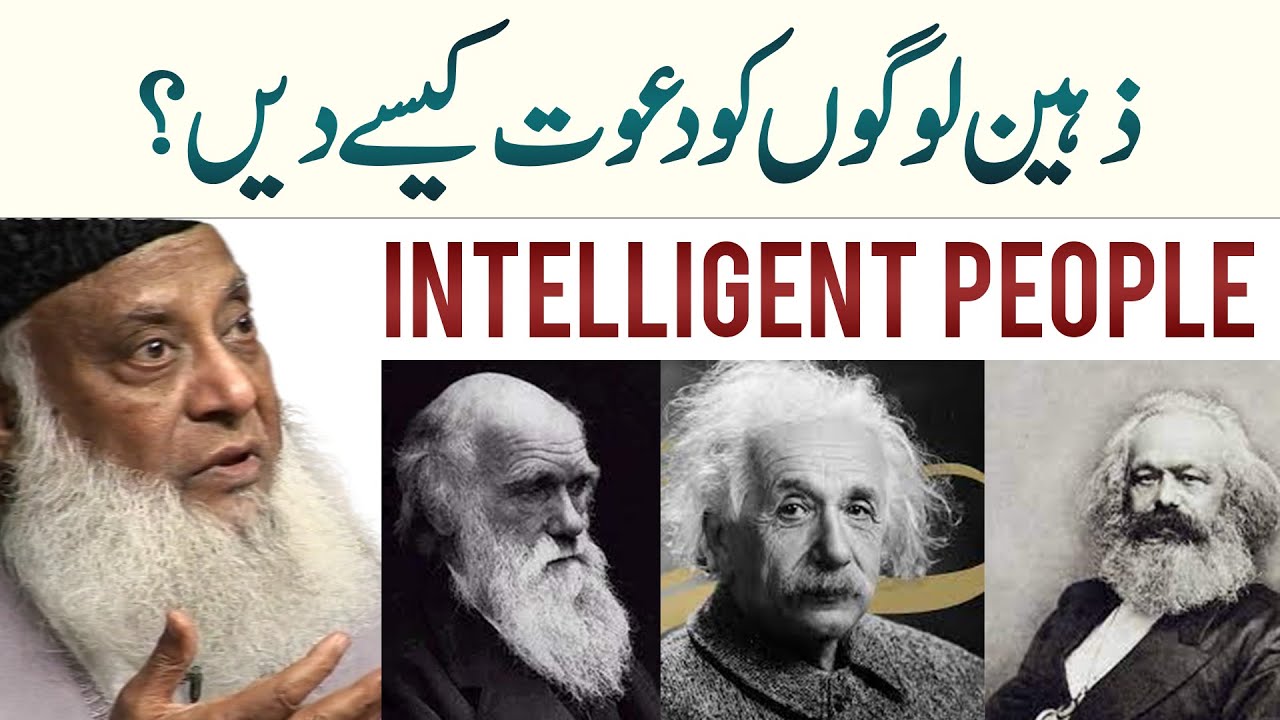
The lecture addresses the necessity of clearing the mind of conflicting ideologies, specifically Darwinian evolution and other Western philosophies, before accepting Islamic teachings. The speaker emphasizes that preconceived notions and intellectual impurities act as barriers to true understanding of religious concepts like the story of Adam and Iblis. He critiques the influence of thinkers such as Darwin, Freud, Marx, Adler, Bertrand Russell, and Sartre on contemporary thought, asserting that these philosophies obstruct a clear reception of Islamic principles. The speaker highlights the importance of intellectual purification to facilitate genuine faith and understanding.
60

This lecture explores the concept of reward in relation to individual capacity and inherent difficulties. It highlights that a single act of goodness, achieved despite significant internal obstacles, can be more valuable in the eyes of God than numerous acts performed with ease. The lecture emphasizes that Divine assessment considers the effort and struggle behind an action, not merely its quantity. It suggests that genuine achievement lies in overcoming personal limitations to perform even a small good deed. The relative ease with which some individuals accomplish good deeds does not diminish the importance of striving for goodness despite personal challenges.
54

Muslims gather five times daily for prayer behind an Imam, and weekly at a central mosque. Twice yearly, large congregations assemble in open fields for Eid prayers. Annually, Muslims from across the globe, representing all schools of thought, converge for Hajj. This organization centers around prayer and pilgrimage, solidifying a connection with God. Daily routines can distract from faith; prayer serves as a vital link. The verse by Iqbal highlights that a believer is lost *in* God, while a non-believer is lost *to* the world.
65
The observance of fasting on the 9th and 10th of Muharram is a recommended practice. It originated from the Prophet Muhammad’s desire to distinguish the Muslims from the Jewish community of Medina, who fasted on the 10th of Muharram commemorating their liberation from Pharaoh. The Prophet, acknowledging a stronger connection to Moses, instructed his companions to fast for two days – the 9th and 10th – instead of one. While not obligatory, this practice holds significance as a voluntary act of worship and a demonstration of the Muslim community's unique identity.
95
