Calção
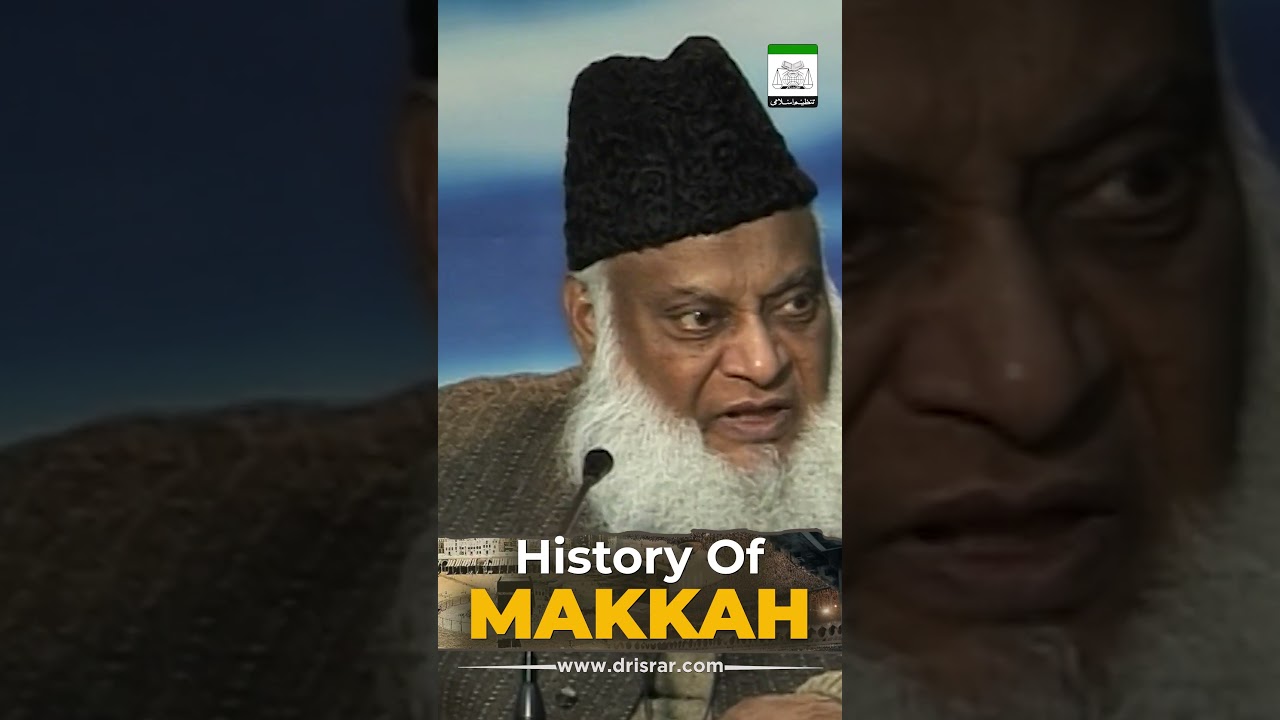
The Kaaba’s origins trace back to Prophet Adam, who was its first architect. The initial structure was destroyed by floods, leaving only its foundations. Prophet Ibrahim, guided by divine instruction, rebuilt the Kaaba upon those original foundations, with the help of his son Ismail. Thus, Ibrahim became the second architect of the Kaaba, restoring it as a place of worship. The lecture details the historical and spiritual significance of the Kaaba's construction and the roles of both Adam and Ibrahim in its creation.

60
It is a universally acknowledged truth that among all books claiming divine origin or containing the word of the universe’s creator, only the Quran maintains complete textual integrity. No other scripture has remained fully preserved in its original form. All other claimed divine texts have undergone alterations or lack complete historical corroboration of their original content. This lecture details the unique preservation of the Quran.
61

A lack of trust between spouses erodes the foundation of marriage and family. If a husband doubts his wife's fidelity or vice versa, it distracts from their connection and weakens their bond. Similarly, paternity concerns destabilize the entire family unit. Maintaining strong sexual attraction within the marriage—focused solely between husband and wife—is crucial for reinforcing this fundamental institution and ensuring its stability. This lecture emphasizes the vital role of mutual trust and focused intimacy in preserving the family structure.
57

This lecture discusses the inevitability of trials and tribulations in the lives of believers, referencing historical hardships faced by early Muslims, particularly during times of famine and war. It emphasizes that these tests are not punishments, but opportunities to demonstrate patience and faith. The speaker recounts instances of extreme hunger experienced by companions of the Prophet Muhammad (peace be upon him), highlighting their resilience and sharing of limited resources. The core message is that enduring hardship with patience brings divine reward and strengthens one’s connection with God.
62
According to revealed scriptures, the gravest sin is usury (interest). Shirk (associating partners with God) is unpardonable. The Quran states God does not forgive associating partners with Him, but forgives lesser sins to whomever He wills. Usury, declared as warfare by God and His Messenger, has become central to modern economic systems like banking and capitalism.
94
Human personality is comprised of two essential aspects: knowledge and thought, and action and character. These two are inextricably linked; a person’s beliefs and ideas manifest in their actions, ethics, and dealings. Correct action stems from sound thinking; flawed foundations lead to flawed outcomes. Limited thought results in limited action and character. A skewed initial approach inevitably leads to a distorted final result.
44
