Corti

This lecture emphasizes the importance of complete submission to God and consistently living in a state of obedience. It cautions against even a moment of disobedience, highlighting the unpredictability of death and urging constant vigilance. The speaker stresses that death can arrive at any moment, even during sinful acts, making continuous self-accountability and adherence to divine commands paramount. The message encourages a life lived with awareness of mortality and a commitment to unwavering obedience.

281
Earthquakes are not based on superstition or coincidence, but are a natural phenomenon linked to the Earth’s structure. The Earth is described as balanced on two horns, similar to a bull. When one ‘horn’ weakens, the Earth shifts to the other, causing seismic activity. This concept predates modern science and is found in revealed texts. The Quran emphasizes abandoning speculation and basing beliefs on knowledge, as highlighted in Surah Al-Furqan and verses in Surah Bani Israel that discourage following what one lacks understanding of. The lecture stresses the importance of grounding faith in reason and observable reality.
72
This lecture clarifies that fulfilling obligatory prayers is the minimum requirement for prayer. While fulfilling obligations is essential, incorporating voluntary prayers (sunnah and nafl) adds depth to one's spiritual practice. The speaker categorizes these voluntary acts based on their emphasis by the Prophet Muhammad, differentiating between those regularly practiced (sunnah mu’akkadah), those practiced occasionally (sunnah ghair mu’akkadah), and other optional prayers (nawafil). It’s recommended to participate in these supplementary prayers to the extent possible, aligning with the guidance of the Prophet and within the bounds of one’s time.
156
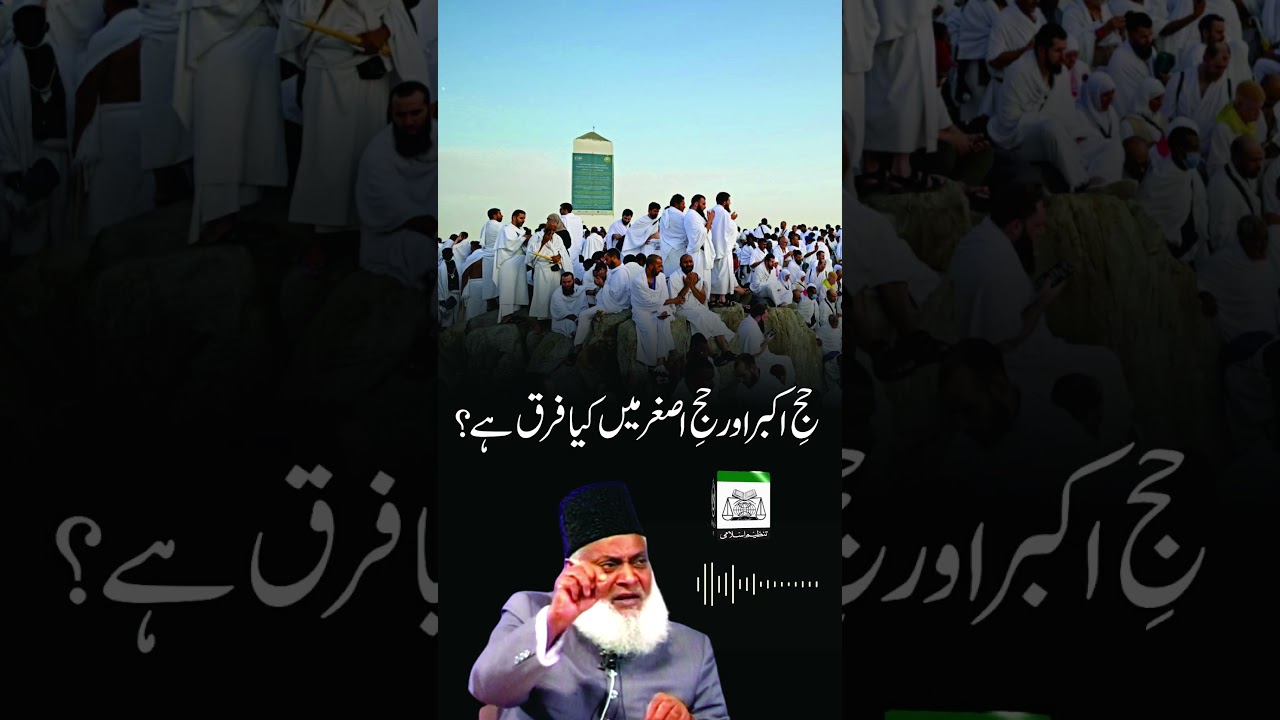
The common misconception that performing Hajj on a Friday is ‘Hajj Akbar’ is inaccurate. Originally, Arabs designated ‘Hajj Asghar’ for Umrah and ‘Hajj Akbar’ for the complete Hajj pilgrimage. The core meaning of ‘Hajj’ is intentional travel or journeying. Therefore, traveling for Umrah also constituted a ‘Hajj,’ albeit a lesser one. The Hajj performed during the designated days in Mecca is considered ‘Hajj Akbar.’ There is no additional merit to performing Hajj specifically on a Friday.
99

This lecture details the events leading up to the creation of Pakistan. It highlights Jinnah’s initial stance of a ten-year unified India with three zones, the opposition from Gandhi who believed Pakistan’s formation depended solely on his consent, and the British government’s animosity towards Italy. The lecture also recounts Maulana Hussain Ahmed Madani’s prediction, made during Ramadan 1946, that the decision for Pakistan's establishment had been finalized within the Majlis-e-A'la. It emphasizes the historical context and key figures involved in the Pakistan Movement.
61

Time is presented as a powerful, swift force that relentlessly diminishes life. The speaker emphasizes that age isn't increasing, but rather decreasing with each passing moment. A person’s lifespan is finite; preoccupation with frivolous activities wastes this precious resource. A truly mindful and devout individual understands time’s value and refrains from squandering it on trivial pursuits. The lecture stresses the importance of recognizing time’s fleeting nature and utilizing it for meaningful endeavors. It highlights that a decreasing lifespan necessitates a focus on purpose and avoiding wasteful activities.
45
