Quần short
This lecture explores the speaker’s reflections on his life’s purpose and original objectives. He emphasizes a shift from viewing faith as merely a tool to embracing it as the ultimate goal. The speaker laments the fragmentation of the Muslim community and expresses a desire to rebuild unity, guiding people towards the destination set by God and the Prophet Muhammad. He highlights a longing to restore a cohesive community focused on divine guidance and shared purpose.

46
This lecture emphasizes the profound importance of showing respect and kindness to parents, especially in their old age. It stresses avoiding any harsh words or dismissive behavior, urging viewers to speak to them with humility, lowered gaze, and utmost reverence. The core message highlights that sincere prayer for their well-being is paramount. It underscores the spiritual reward of caring for aging parents and the detrimental consequences of disrespect.
200
Everything in the heavens and the earth glorifies Allah. While praising Allah is essential – as even inanimate objects and plants do – humanity, granted stewardship of the earth and divine favor, is obligated to do more. True faith demands action: actively striving to establish divine guidance and elevate the word of God. Simply reciting praise is insufficient; believers must demonstrate their commitment through dedicated effort and sacrifice to make God’s will prevail. The core requirement of faith in God is not just glorification, but actively working to establish His dominion and uplift His message.
58
This lecture explores the unparalleled glory and status of the Prophet Muhammad (peace be upon him). It emphasizes that after Allah, the Prophet is the most significant figure in existence. The speaker highlights the Prophet’s luminous face as the source of all light and acknowledges the human mind’s inability to fully comprehend the Prophet’s greatness. The lecture ultimately asserts that seeking refuge in the Prophet’s presence is the path to salvation, recognizing his unmatched spiritual stature.
86
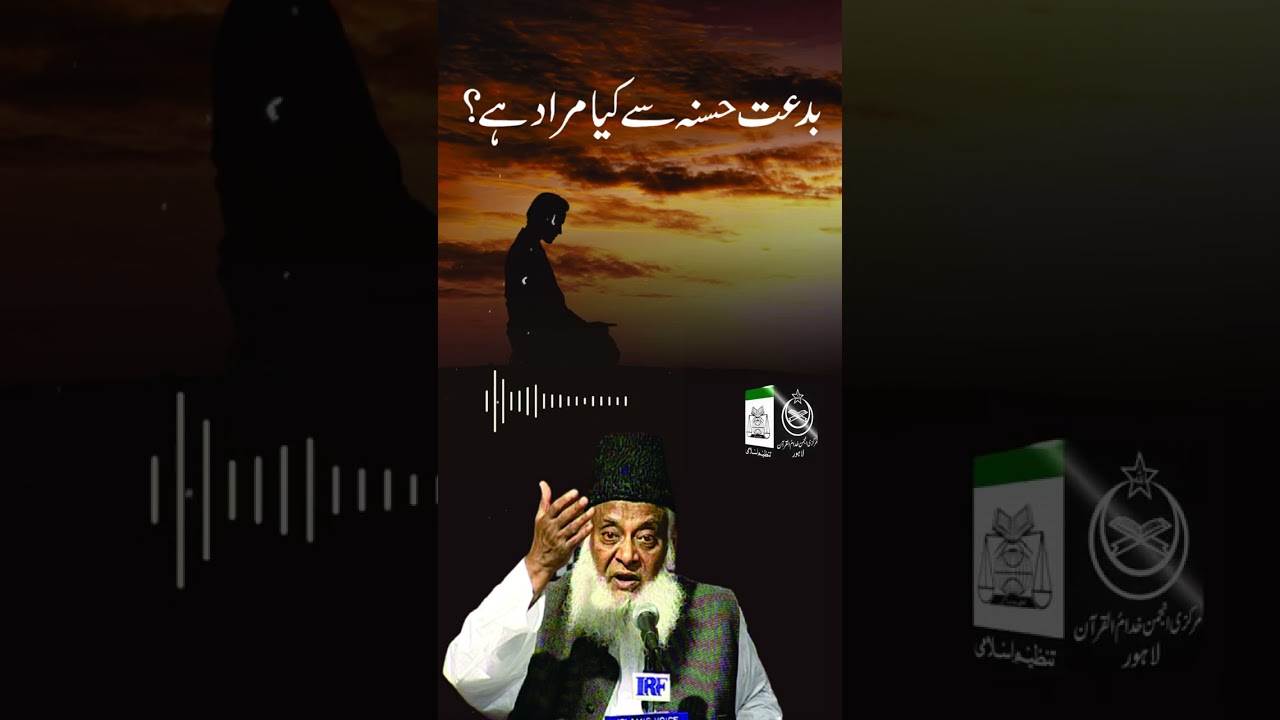
The lecture discusses the concept of *bidat* (innovation) in religious practice, specifically distinguishing between permissible and impermissible innovations. It focuses on the example of Hazrat Umar Farooq (RA) initiating the practice of reciting *tarawih* prayers in rows behind the Imam, which he termed a *bidat hasana* (good innovation). However, the lecture emphasizes that the right to declare an innovation as *hasana* is exclusive, and Muslims should adhere to the example of the Prophet Muhammad (peace be upon him) and the rightly guided caliphs. The core argument is that innovation should not be introduced independently, but only when justified by established principles and guided by prophetic tradition. Following the Prophet’s and the rightly guided caliphs’ practices is paramount.
67
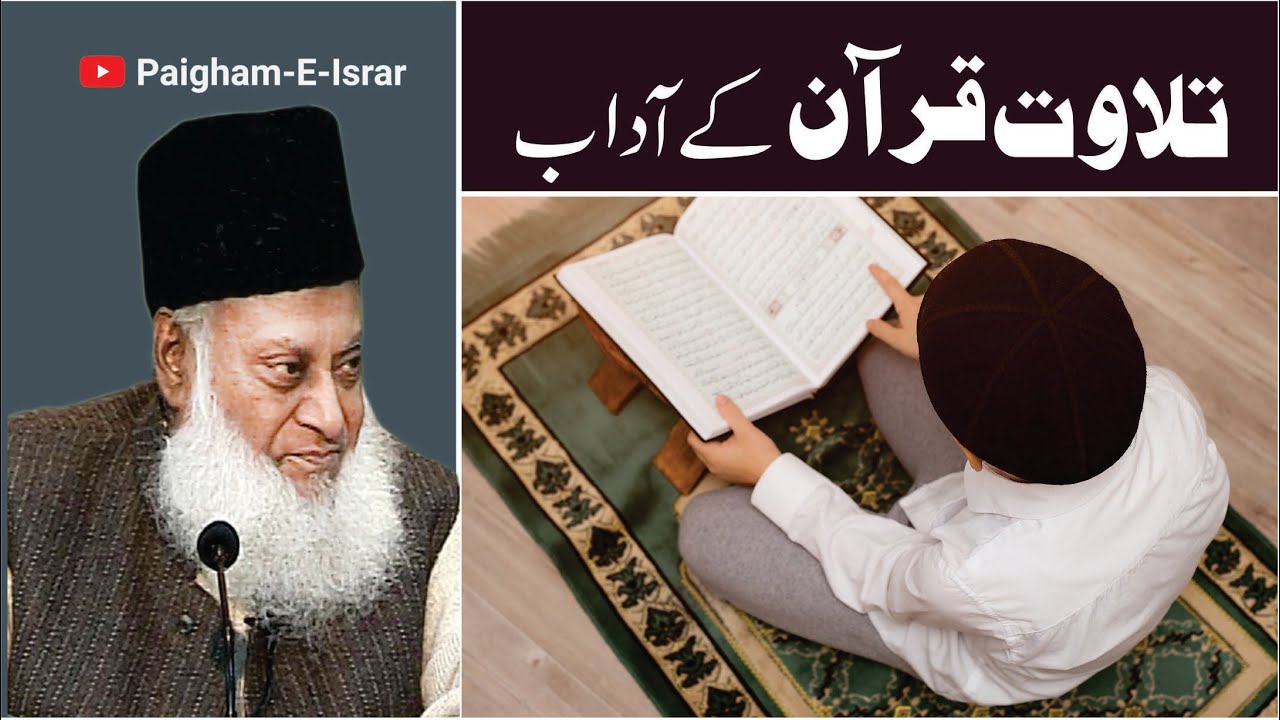
Dr. Israr Ahmad discusses the proper method of Quran recitation, emphasizing the importance of correct pronunciation (tajweed), understanding the meaning, and avoiding superficial artistic displays. He contrasts true Quranic recitation with competitive performances, highlighting that the Quran should enter the heart, not just be a vocal exercise. He warns against reciting Quran while engaging in sinful activities, and stresses that a sincere connection with the Quran strengthens faith and resilience. He also clarifies the difference between *tilawat* (recitation) and *tartil* (rhythmic, meaningful recitation). He cautions against relying solely on eloquent recitation without comprehension, and advocates for learning from qualified teachers to ensure accurate pronunciation and understanding.
129
