شارٹس

This lecture explores the negative characteristics of arrogance and miserliness, highlighting their spiritual and societal harms. It details how pride often stems from a fear of losing wealth and status, leading to stinginess and discouraging generosity. The lecture further explains how individuals consumed by these traits not only hoard their possessions but also encourage others to do the same, fearing criticism for spending. Ultimately, it warns of the severe consequences awaiting those who persist in these behaviors, emphasizing the importance of humility and generosity as virtues pleasing to God.

62

The origins of the name Ramadan are debated. One view connects it to the intense heat that historically impacted the Arabian Peninsula, causing hardship and natural purification. This led to a belief that Ramadan offered a time of spiritual cleansing. Another perspective links the name to one of the names of God, signifying that Ramadan is God's month. This is supported by a saying of the Prophet Muhammad, who identified Sha’ban as his month and Ramadan as the month of God. The purpose of fasting during Ramadan is fundamentally to purify the impurities accumulated within the human body.
67

This lecture addresses the societal shift where religious practice has become a profession, particularly within certain communities. The speaker argues that Islam does not endorse professionalizing faith or creating hierarchies based on religious knowledge. He criticizes the practice of making religious scholars a closed class and highlights the irony that those who benefit from this system often criticize the scholars themselves. The core argument centers on the idea that Islam is a faith for all, not a vocation limited to a select few, and that the current system of professionalizing religion is a deviation from its original intent. He contrasts this with the historical practice where religious knowledge was freely accessible and emphasizes that making it a profession creates jealousy and division.
100
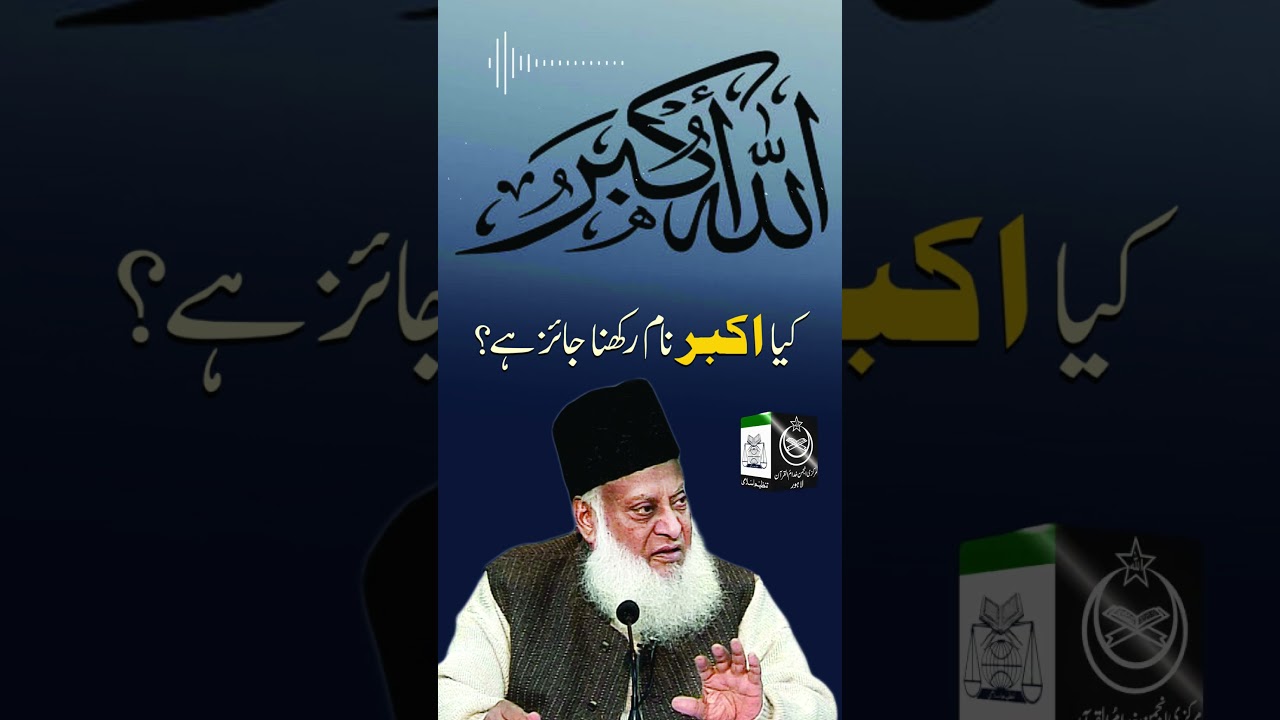
The lecture addresses the permissibility of naming someone 'Akbar'. It clarifies that the name 'Akbar' in itself does not equate to the name of God, as 'Allah Akbar' is a specific phrase denoting God’s greatness. The name 'Akbar' becomes associated with God only when prefixed with 'Al-' (the definite article). Therefore, using 'Akbar' as a personal name is permissible, as it does not inherently invoke the divine name without the necessary prefix.
90

The speaker reflects on a lifetime of acquiring knowledge – philosophy, Eastern and Western learning – and realizes its inadequacy without divine connection. He describes this knowledge as a fruitless palm tree, devoid of benefit. He expresses a desire to move beyond intellectual understanding to experience divine madness, passion, and a consuming love for God, seeking a spiritual awakening after resolving life’s complexities.
61

The lecture clarifies that love for anyone or anything should not equal or exceed love for God. Equating love with God constitutes *shirk* (associating partners with God). The Quran states some people create equals to God and love them as they should love God. True believers, however, possess a stronger love for God. Love for parents and children is permissible, but it must not surpass the love for God. This principle ensures devotion remains solely to God, preventing the elevation of created beings to a level comparable to the Creator.
67
