Korte broek
This lecture explores the spiritual state of having one’s heart opened by God for Islam, contrasting it with the darkness of spiritual hardness. It highlights that divine guidance illuminates the heart, providing inner understanding and a connection with God. Those who reject this guidance and whose hearts become hardened against remembrance of God face destruction and are clearly astray. The lecture emphasizes that a receptive heart is essential for faith and spiritual growth, while a hardened heart leads to misguidance and ultimate loss.

87
This lecture discusses the recitation of at least three verses of the Quran in each *rak'ah* (prayer cycle) after Surah al-Fatiha, based on the practice and guidance of the Prophet Muhammad (peace be upon him). It highlights that the Quran itself is structured in sections of at least three verses. The lecture specifically references Surah al-Kausar and Surah al-Asr as examples of Quranic sections containing exactly three verses, emphasizing their significance. The speaker explains that this practice ensures complete engagement with the Quran during prayer, aligning with the prophetic tradition.
59
Despite disheartening circumstances, Dr. Israr Ahmad conveys a hopeful message regarding the eventual establishment of a caliphate based on the principles of prophethood. This prophecy, originating from the Prophet Muhammad (peace be upon him), assures a future era of righteous leadership and divine truth. The lecture emphasizes the certainty of this event and removes any doubt for a believing individual.
202
Buying and selling shares in a company is permissible for a Muslim if the company conducts legitimate business. However, involvement with a company that manufactures alcohol is prohibited, making any shareholding or trade in it unlawful. Speculation within stock exchanges is also considered haram. Basic share trading itself is not forbidden, but additional complexities can render it impermissible.
111
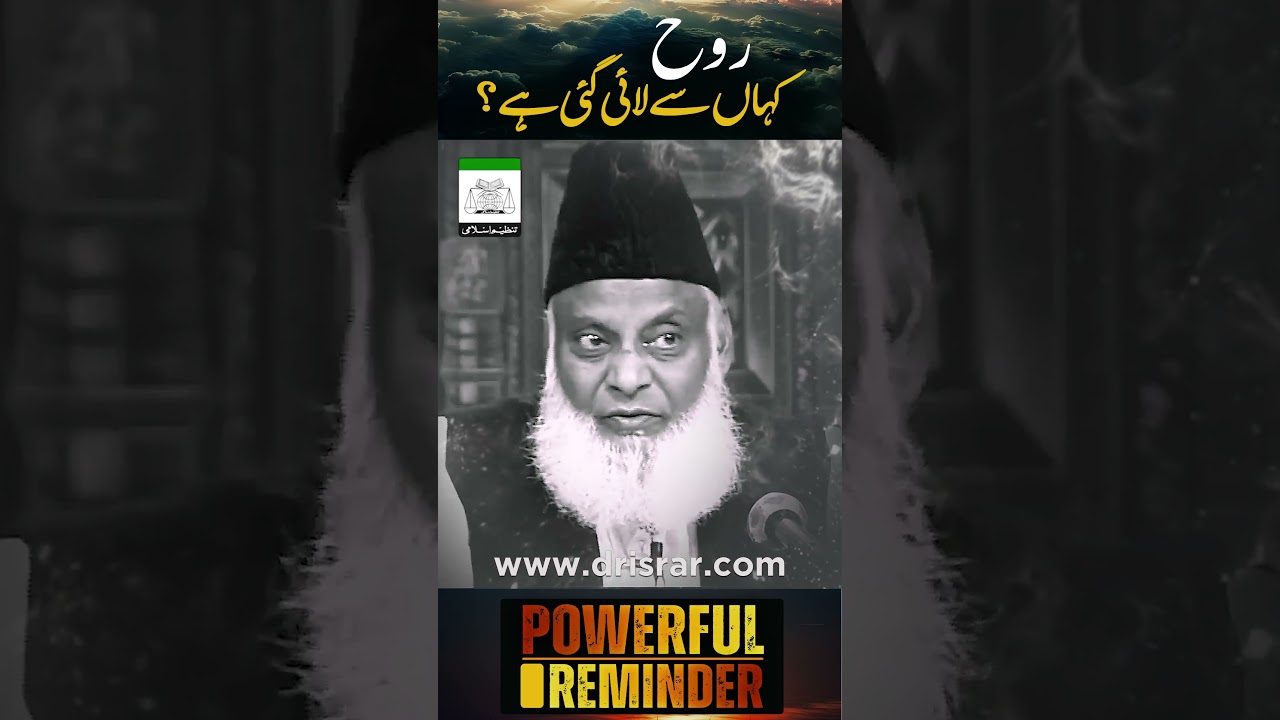
The soul is distinct from the body. While death seizes the body, returning it to the earth from whence it came, the soul does not experience death itself. It is a transfer, originating from God and returning to Him. The soul temporarily inhabits the body during earthly life, then either resides in 'Aliyeen' or 'Sijjeen' – realms of varying states – awaiting eventual return to its divine source. The body is subject to earthly cycles of creation and dissolution, but the soul is eternal and its destiny lies with God.
56
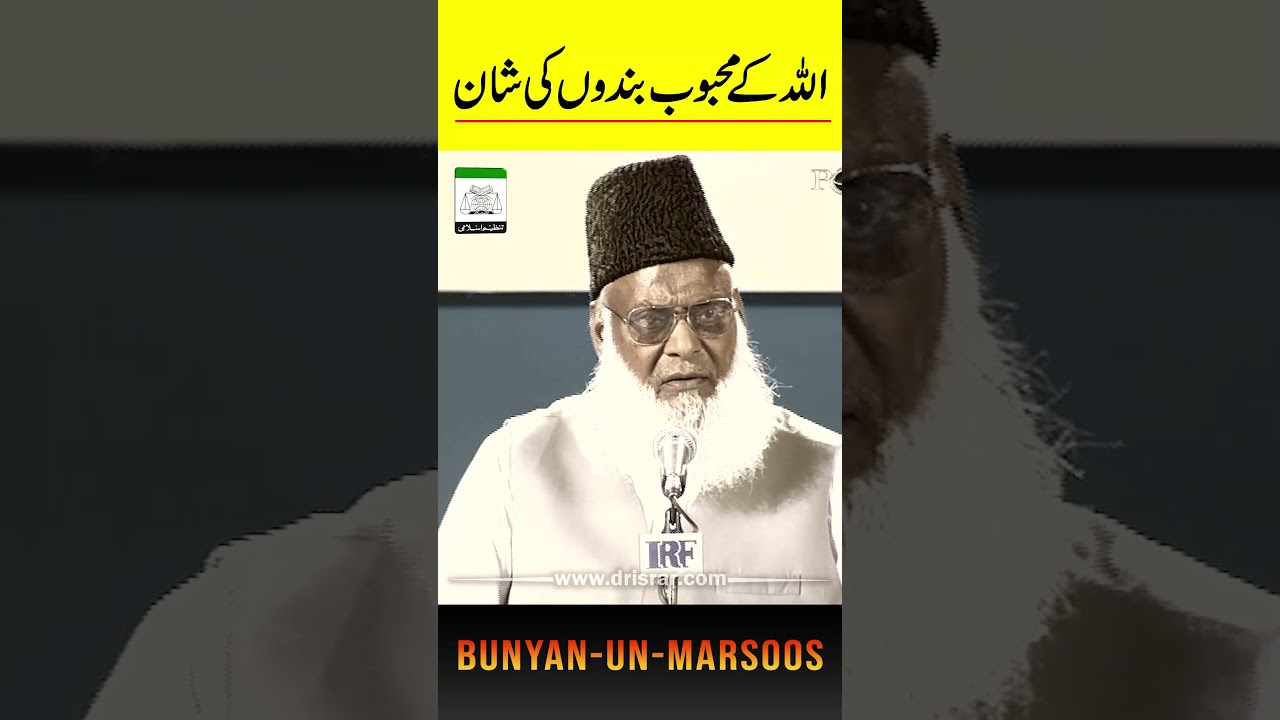
This lecture explores the concept of unwavering faith and dedication to God’s path, drawing a parallel to a solid, impenetrable wall. Dr. Israr Ahmad explains that true believers stand firm in their commitment, united and resolute, much like a wall reinforced with concrete. He references Iqbal's poetry to illustrate the courage and strength of those who fight for their faith, highlighting that God loves those who strive in His cause, standing together as an unbreakable force. The lecture emphasizes that this steadfastness is the key to attaining divine favor and recognition.
69
