শর্টস
This lecture discusses the plight of women, particularly in Western societies, highlighting the burdens they bear – pregnancy, childbirth, and financial responsibility. It critiques the objectification of women and questions the values of Western civilization, suggesting a concerning trend of exploitation and disregard for their dignity. The speaker emphasizes the need to understand and respect women's true worth and role in society.

421
The Quran is presented as the ultimate source of clarity and healing for the heart. It eradicates spiritual diseases such as arrogance, envy, materialism, the pursuit of worldly status, and the desire for fame. The Quran’s wisdom illuminates the heart, replacing these negative traits with spiritual purity and understanding. It is a complete remedy for inner turmoil and a guide to a righteous life. The Quran's light dispels darkness and fosters a connection with the Divine.
277

The soul is distinct from the body. While death seizes the body, returning it to the earth from whence it came, the soul does not experience death itself. It is a transfer, originating from God and returning to Him. The soul temporarily inhabits the body during earthly life, then either resides in 'Aliyeen' or 'Sijjeen' – realms of varying states – awaiting eventual return to its divine source. The body is subject to earthly cycles of creation and dissolution, but the soul is eternal and its destiny lies with God.
44
This lecture explores the concept of finding God not in distant realms, but within one’s own heart. It emphasizes the accessibility of divine connection through introspection and remembrance. The speaker highlights that the essence of faith lies in recognizing God’s presence within, and that the human heart is the primary locus for experiencing the divine. The lecture also contemplates the trials faced by humanity, particularly the greatest test for the most noble of creations. It stresses the importance of self-reflection and finding beauty and divine signs in the world around us.
141
Human existence is defined by aspiration and purpose. Every individual has an ideal or a driving force. Those solely focused on basic needs – eating, procreating, and raising children – live on a purely instinctual level, akin to animals. True humanity lies in defining a higher purpose, particularly the love and devotion to God. This lecture emphasizes that the ultimate purpose of life is to seek and love God, making Him the sole objective and desire. Living and dying should be dedicated to this pursuit.
51
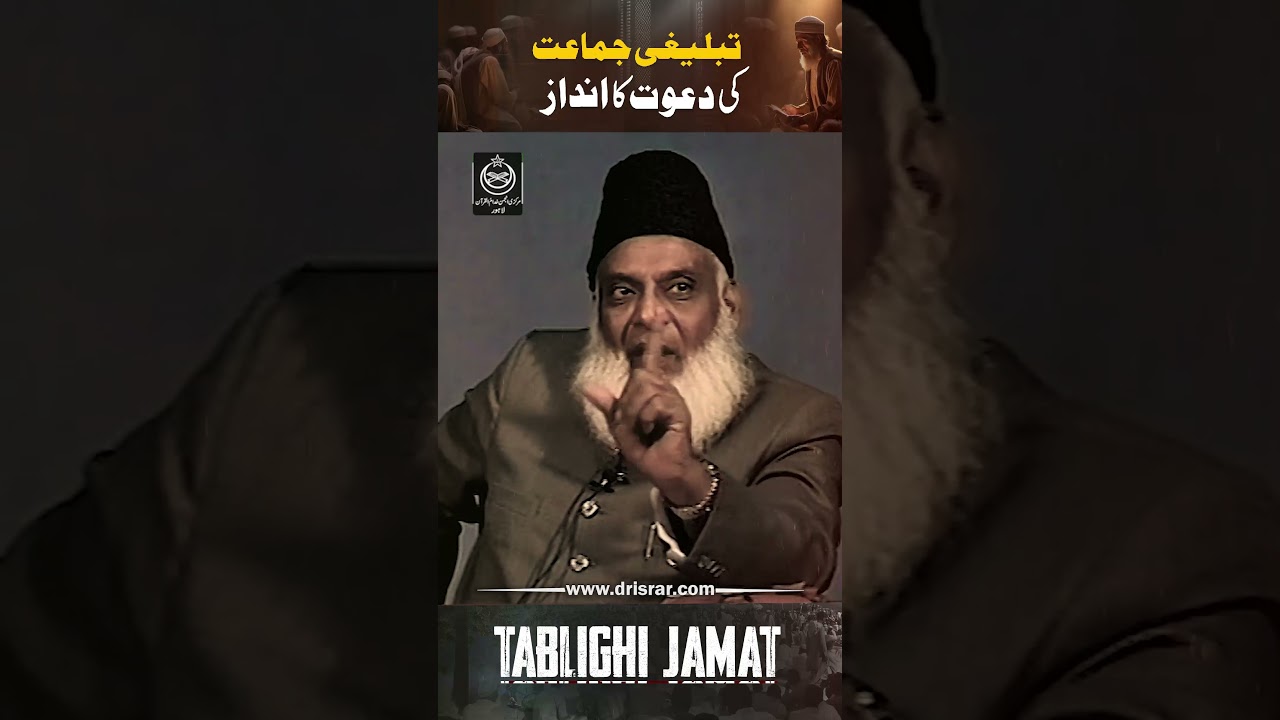
Dr. Israr Ahmad analyzes the Tablighi Jamaat's methodology, asserting its primary appeal is emotional rather than intellectual. He explains how the movement quickly attracts individuals through emotional connection, then immerses them in a new environment for varying periods – three days, four months, or longer – to cultivate a specific mindset and temperament. He emphasizes the airtight logic within their methodology, designed to instill positive intentions and commitments, even if fleeting. The speaker highlights their persuasive tactic of encouraging pledges and intentions, creating a sense of obligation. He notes the group’s effectiveness in securing initial commitments, even if they are not long-lasting.
75
