Kurze Hose

True piety isn't demonstrated through outward acts of worship directed towards the east or west. Genuine goodness lies in sincere belief in God, the Day of Judgment, angels, scriptures, and prophets. Actions must be performed solely for the pleasure of God and the reward in the afterlife. Deeds motivated by worldly gain are mere transactions, not acts of piety. A firm faith in God and the afterlife is essential for any act to be considered truly virtuous; otherwise, it is a superficial facade, like gold plating over brass, easily stripped away. Actions lacking sincere intention are temporary and hold no lasting value.

49

Dr. Israr Ahmad discusses the enigmatic figure of Zul-Qarnain mentioned in the Quran. He explores the possibility that Zul-Qarnain may be connected to the historical figure of Gautama Buddha, noting the lack of detailed information about Zul-Qarnain in both the Quran and Hadith. He suggests a link based on geographical references within Surah Al-Kahf and the story of a prince from Kapilavastu. Dr. Ahmad acknowledges the potential for later interpretations and additions to Buddha’s teachings, similar to those surrounding Jesus Christ, while also pointing out a possible consistency between the core principles of all prophets of God. He emphasizes the need for critical analysis and understanding of historical and religious figures.
68
This lecture emphasizes that the completion of divine law through the Prophet Muhammad (peace be upon him) necessitates adherence for personal growth and fulfillment. It clarifies that Islamic law is not a burden but a guide for navigating life’s challenges, using the analogy of road signs on a dangerous mountain path. These signs, like the tenets of Shariat, are preventative measures designed to ensure safety and lead individuals towards the purpose for which they were created by God. The speaker highlights that restrictions within Shariat are not arbitrary, but rather safeguards for one’s wellbeing and spiritual development.
63

Time is presented as a powerful, swift force that relentlessly diminishes life. The speaker emphasizes that age isn't increasing, but rather decreasing with each passing moment. A person’s lifespan is finite; preoccupation with frivolous activities wastes this precious resource. A truly mindful and devout individual understands time’s value and refrains from squandering it on trivial pursuits. The lecture stresses the importance of recognizing time’s fleeting nature and utilizing it for meaningful endeavors. It highlights that a decreasing lifespan necessitates a focus on purpose and avoiding wasteful activities.
52
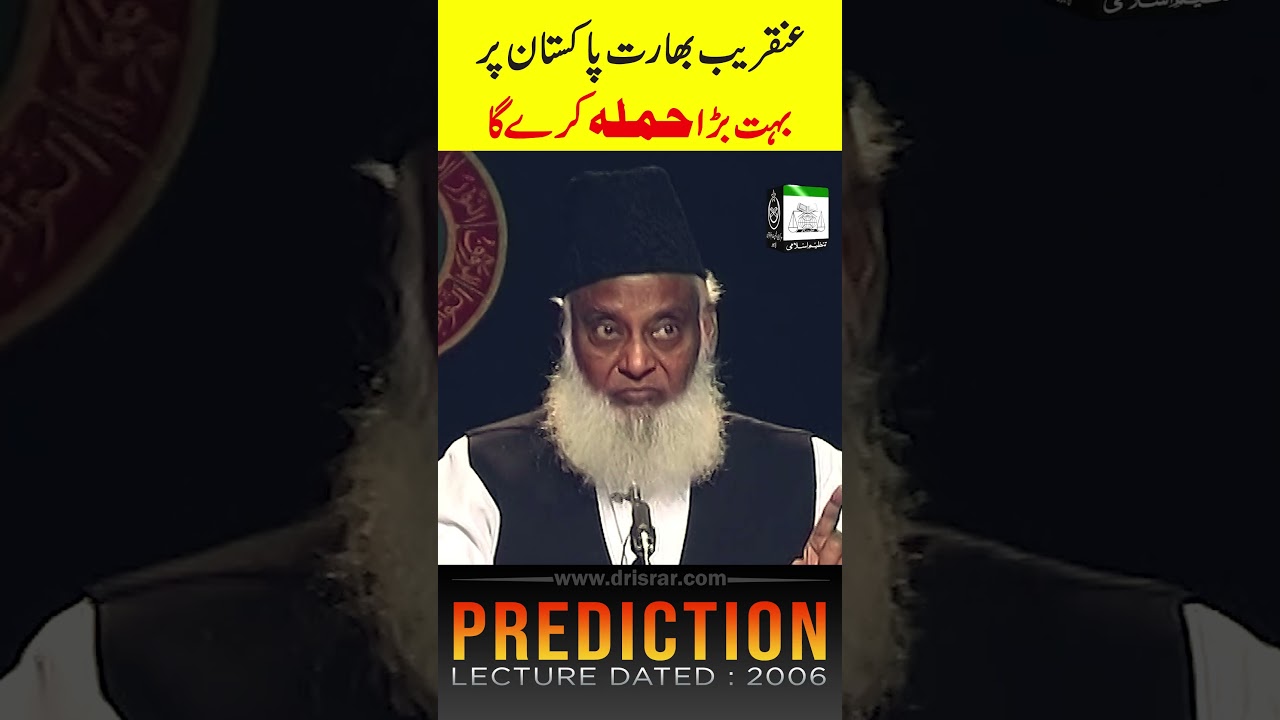
This lecture discusses a potential large-scale conflict between India and Pakistan if China and Pakistan strengthen their alliance. The speaker predicts a future Islamic revival originating from the region, even at a significant cost in lives. A key prophecy from Shah Aliullah Dehlavi foretells a time when the upper castes of India will predominantly convert to Islam. The lecture emphasizes the historical trajectory and inevitable changes occurring, acknowledging the inability to prevent these unfolding events.
67

This lecture explains the process of self-purification (Tazkiya-e-Nafs) using the analogy of a gardener tending to a garden. Just as weeds hinder the growth of plants by consuming vital nutrients and water, negative traits and obstacles impede human spiritual development. The gardener actively removes these impediments to allow the desired plants to flourish. Similarly, Tazkiya involves identifying and eliminating the internal barriers that prevent true growth and realizing one’s potential. This process is essential for achieving genuine spiritual progress.
91
