Şort
This lecture emphasizes the importance of reason ('aql) as a pathway to understanding divine guidance. It asserts that belief should be grounded in either rational thought, the teachings of the Quran, or the traditions of the Prophet Muhammad. The speaker stresses that knowledge stems from sensory experience, intellectual reasoning, or reliable transmission. Blind adherence to anything without understanding is discouraged. True knowledge is either acquired through one’s own senses, intellect, or through verified sources.

40

Life is a journey with the afterlife as its ultimate destination. This world is a provision for the hereafter, not one’s permanent home. The core message emphasizes *taqwa* (God-consciousness) as the path to a meaningful existence. Humanity, originating from Adam and Eve, is interconnected and should maintain reverence for God in all dealings, recognizing Him as the ultimate source of fulfillment for all needs. The lecture stresses the importance of piety and recognizing our relationship with God and each other.
52

Dr. Israr Ahmad discusses the enigmatic figure of Zul-Qarnain mentioned in the Quran. He explores the possibility that Zul-Qarnain may be connected to the historical figure of Gautama Buddha, noting the lack of detailed information about Zul-Qarnain in both the Quran and Hadith. He suggests a link based on geographical references within Surah Al-Kahf and the story of a prince from Kapilavastu. Dr. Ahmad acknowledges the potential for later interpretations and additions to Buddha’s teachings, similar to those surrounding Jesus Christ, while also pointing out a possible consistency between the core principles of all prophets of God. He emphasizes the need for critical analysis and understanding of historical and religious figures.
59
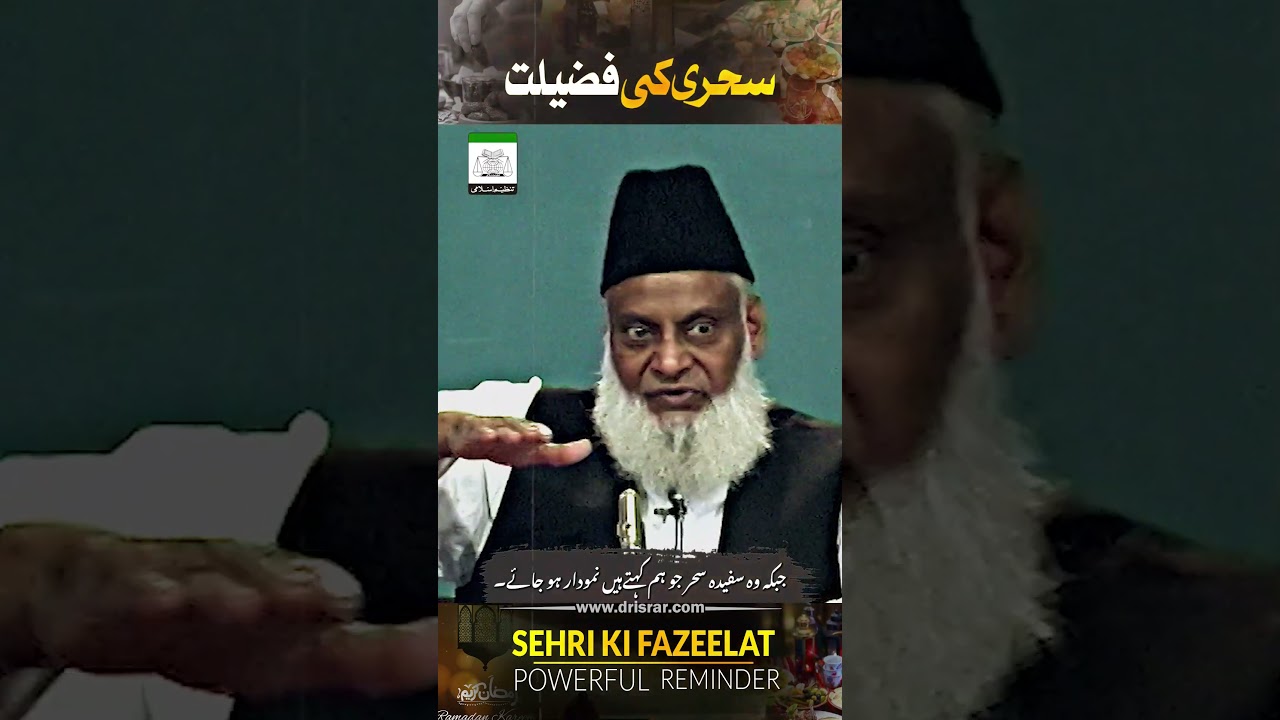
Dr. Israr Ahmad explains the significance of *suhoor* (pre-dawn meal) in Islam. He highlights that *suhoor* distinguishes Muslim fasting from that of the Jews. Fasting begins at dawn, not sunrise, allowing time for the meal. He cautions against excessive strictness in observing the timing of *suhoor*, referencing the Prophet Muhammad’s emphasis on ease and avoiding unnecessary hardship in religious observance. The practice should be approached with balance and moderation, prioritizing accessibility and avoiding overly rigorous interpretations.
58

The Prophet Muhammad (peace be upon him) stated that the greatest struggle is the internal battle against one's own base desires (nafs). External enemies are easier to confront; the true enemy resides within. This internal struggle, or *jihad*, against the commanding self is the most virtuous form of worship. The Prophet clarified that the most excellent form of *jihad* is striving against one’s *nafs* in obedience to God. This lecture explores the profound significance of self-discipline and spiritual refinement.
52

This lecture emphasizes the importance of respectful communication. It cautions against raising voices above the Prophet Muhammad’s, discourages boisterous or disrespectful dialogue, and warns that a lack of decorum can lead to the complete loss of influence and effectiveness, leaving one unaware of the damage caused. Maintaining respectful speech is crucial for preserving dignity and achieving positive outcomes in all interactions.
58
