Shorts
This lecture elucidates the severe consequences of animosity towards a pious individual, or *Wali Allah*. It emphasizes that hostility towards a friend of God is equivalent to declaring war against God Himself. The discussion highlights that true spiritual pain arises from causing hurt to those with sensitive hearts, and that hurting a *Wali Allah* brings shame and disgrace upon an entire community. The lecture stresses that genuine love for God is reflected in compassion and care for His devoted servants, and that inflicting pain on them invites divine retribution. The core message is that harming those close to God brings about spiritual and communal ruin.

59
This lecture clarifies the conditions for sincere repentance (tawbah) and its implications regarding past sins. It explains that genuine repentance, marked by remorse and a commitment to abstain from sin, leads to Allah's forgiveness. Regarding missed prayers, the speaker suggests making up for them as if they were voluntary prayers (nawafil). For rights violated against others, repentance requires seeking forgiveness from the wronged, compensation, or facing consequences in the afterlife, with potential recompense through good deeds or bearing the burden of sins. Complete and valid repentance serves as expiation for all sins.
55

Zakat, a foundational pillar of Islam, is presented as more than just charity. It’s the initial expression of one’s ability to spend in the way of God, enabling fulfillment of others’ needs. Like a sealed bottle preventing any outflow, hoarding wealth stifles spiritual growth. Zakat unlocks this blockage, even in the most miserly, prompting generosity through obedience to divine command. This act of giving, even if singular, establishes a basis for diminishing the love of wealth within the heart, paving the way for increased compassion and giving.
74
Human existence is defined by aspiration and purpose. Every individual has an ideal or a driving force. Those solely focused on basic needs – eating, procreating, and raising children – live on a purely instinctual level, akin to animals. True humanity lies in defining a higher purpose, particularly the love and devotion to God. This lecture emphasizes that the ultimate purpose of life is to seek and love God, making Him the sole objective and desire. Living and dying should be dedicated to this pursuit.
57
Salvation is contingent upon a combination of four essential elements: faith, righteous deeds, consistently speaking the truth, and patience. Without fulfilling these conditions, one remains in loss. The lecture emphasizes that true success and deliverance are achieved only through the complete adherence to these principles, as outlined in Surah Al-Asr. It stresses that merely believing isn't enough; action, truthfulness, and steadfastness in the face of adversity are equally crucial for attaining salvation and avoiding ultimate loss.
69
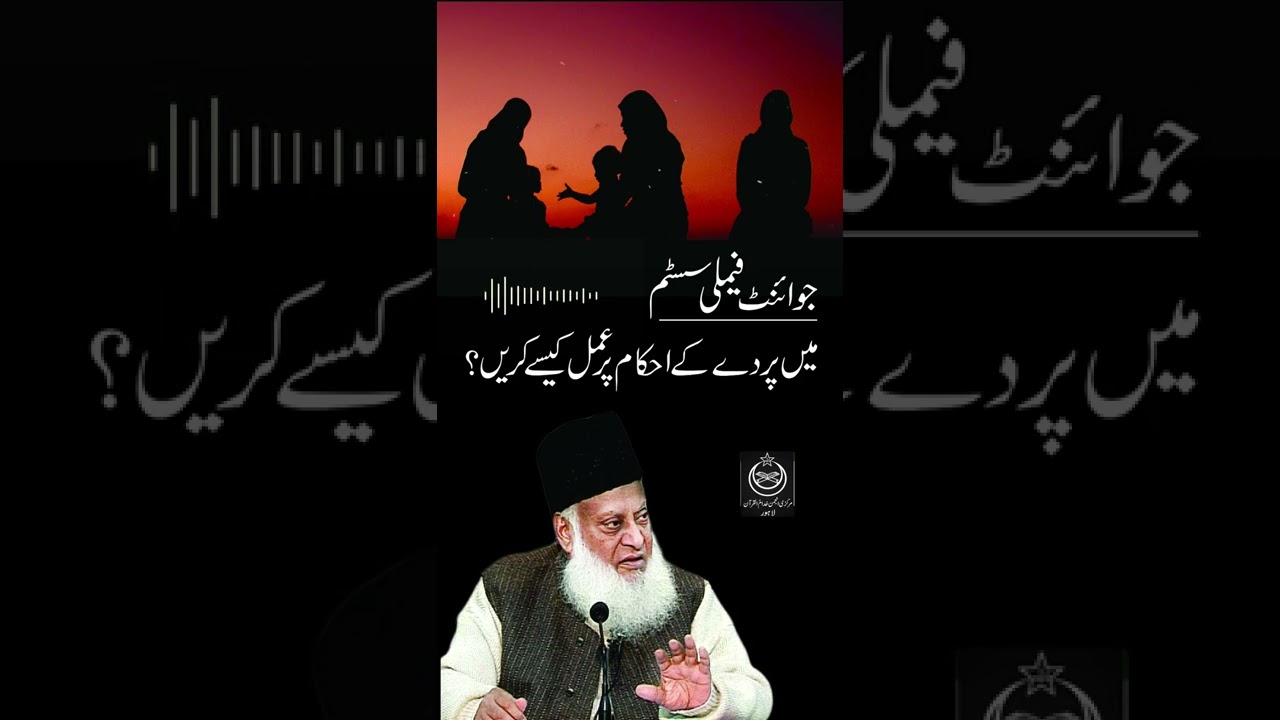
This lecture discusses the application of *purdah* (modesty/seclusion) within a joint family system. Dr. Israr Ahmad explains that while strict adherence to *purdah* as practiced between separate households isn't possible, certain guidelines can be followed. These include avoiding direct face-to-face interaction between a younger brother's wife and her husband’s elder brother, maintaining distance, and ensuring privacy during work or activities where unrelated men may be present. The discussion uses an example of a woman working while maintaining *purdah* from male relatives and outsiders.
92
