Korte broek

This lecture explores the concept of unwavering faith and dedication to God’s path, drawing a parallel to a solid, impenetrable wall. Dr. Israr Ahmad explains that true believers stand firm in their commitment, united and resolute, much like a wall reinforced with concrete. He references Iqbal's poetry to illustrate the courage and strength of those who fight for their faith, highlighting that God loves those who strive in His cause, standing together as an unbreakable force. The lecture emphasizes that this steadfastness is the key to attaining divine favor and recognition.

69

Companions of the Prophet Muhammad (peace be upon him) expressed their distress regarding increasing hardships. The Prophet (peace be upon him) reminded them that previous followers of Islam faced even greater trials, including being burned alive, buried alive, and dismembered. He emphasized the importance of patience and perseverance, stating that trials are a test from God and that relief will come in due time. He cautioned against impatience and assured them that enduring hardship is a characteristic of true believers.
84
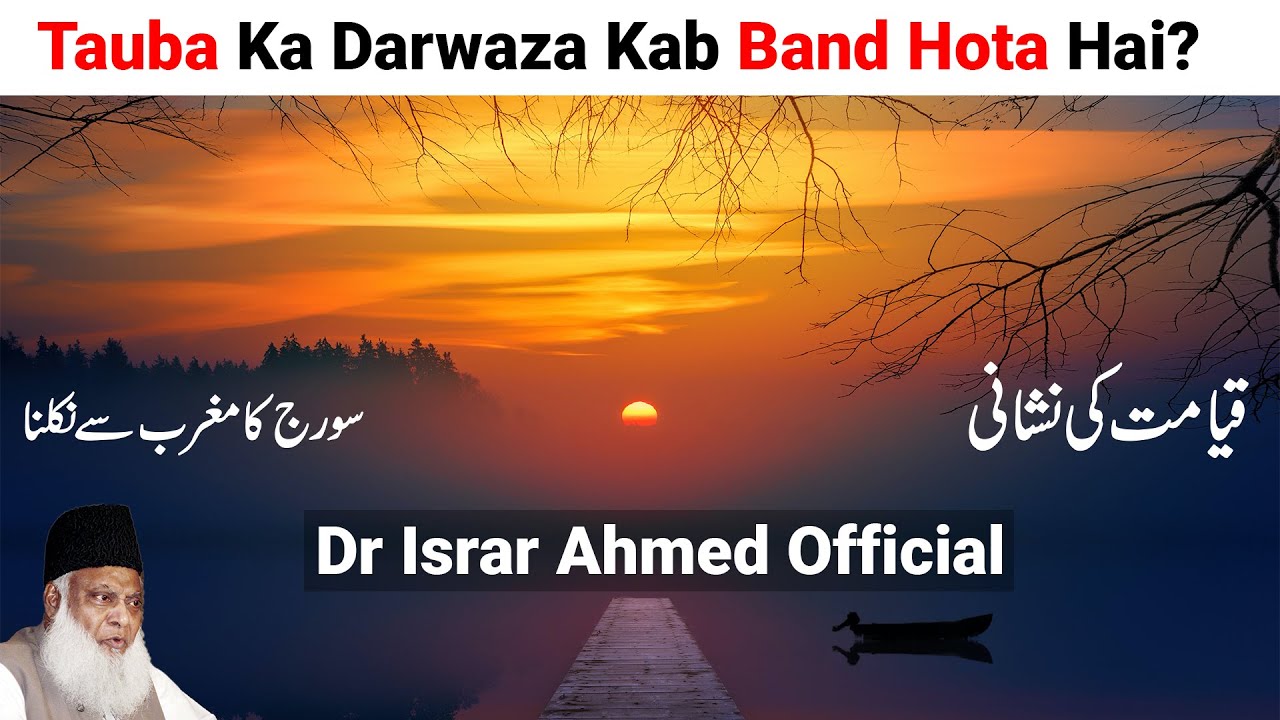
The door of repentance remains open for a considerable time, allowing individuals years to seek forgiveness. This opportunity continues until the setting of the sun from the west—a major sign of the approaching Day of Judgement. The Quran states that Allah will accept the repentance of those who turn to Him before this sign appears. Once the sun begins to rise from the west, the door of repentance will be closed, and any subsequent repentance will not be accepted. This emphasizes the urgency of seeking forgiveness while time remains.
70

Dr. Israr Ahmad explains that the practice of *barat* (wedding processions) has no basis in Islamic scripture. He details its origins in pre-Islamic, specifically Hindu, customs. Historically, *barats* originated as armed escorts to transport the bride and her dowry safely between villages, protecting against bandits. These processions evolved into extravagant, multi-day celebrations involving feasting and displays of wealth. Dr. Ahmad asserts that this entire practice is foreign to Islamic teachings and represents a cultural import, not a religious obligation. The custom’s roots lie entirely outside Islam.
65

Muslims gather five times daily for prayer behind an Imam, and weekly at a central mosque. Twice yearly, large congregations assemble in open fields for Eid prayers. Annually, Muslims from across the globe, representing all schools of thought, converge for Hajj. This organization centers around prayer and pilgrimage, solidifying a connection with God. Daily routines can distract from faith; prayer serves as a vital link. The verse by Iqbal highlights that a believer is lost *in* God, while a non-believer is lost *to* the world.
65
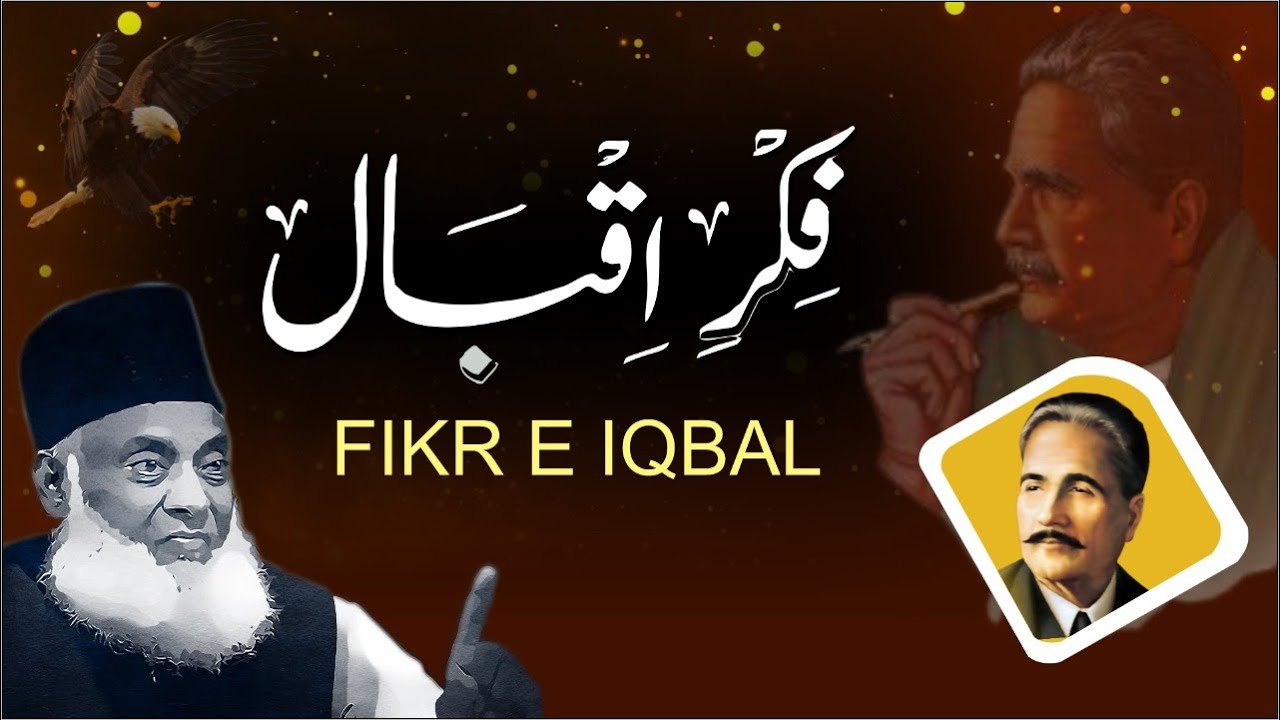
Iqbal critically analyzed modern ideologies, identifying inherent dangers within them. He particularly opposed nationalism (wataniyat) as a political concept, viewing it as a new form of idolatry that overshadows faith. He contrasted the spiritual unity of Islam with the divisive nature of national identities. Iqbal saw secularism and nationalism as major threats—forms of shirk (polytheism) and kufr (disbelief)—and materialism as the defining characteristic of contemporary civilization. He argued that true strength lies in adhering to the principles of Tawhid (Oneness of God) and embracing Islam as a complete way of life.
75
