ショーツ
Life is a journey with the afterlife as its ultimate destination. This world is a provision for the hereafter, not one’s permanent home. The core message emphasizes *taqwa* (God-consciousness) as the path to a meaningful existence. Humanity, originating from Adam and Eve, is interconnected and should maintain reverence for God in all dealings, recognizing Him as the ultimate source of fulfillment for all needs. The lecture stresses the importance of piety and recognizing our relationship with God and each other.

52
Universal moral principles are consistent across all religions, philosophies, and cultures. These include the inherent goodness of truthfulness, promise-keeping, fulfilling needs, honoring parents, and the inherent wrongness of lying, breaking promises, being dismissive, and neglecting parental duties. These foundational ethical guidelines are present in every society, consistently emphasized throughout history.
49
The Quran’s resounding verses jolted people from their slumber and roused those lost in worldly pleasures. The verses of Surah Al-Asr emphasize humanity’s inherent loss and the impending accountability. The approaching Day of Judgement finds people heedless and turning away. These powerful pronouncements caused widespread upheaval and a sense of urgency throughout Arabia, compelling a reckoning with spiritual realities.
40

This lecture identifies the characteristics of hypocrites as described in a hadith. It highlights four key traits: lying, breaking promises, dishonesty when entrusted, and losing temper in disagreement. The speaker emphasizes that outward displays of religious practice—prayer and fasting—do not negate these inner qualities. The lecture urges self-reflection and societal assessment, suggesting a correlation between prominence and hypocrisy. The speaker notes that often those in positions of power are the most deceitful and untrustworthy.
87
This lecture discusses the Islamic perspective on charitable giving and the rights of heirs. A companion of the Prophet Muhammad (peace be upon him) inquired about donating all his wealth for the sake of Allah. The Prophet advised against leaving heirs destitute, emphasizing their rightful share. The companion then proposed donating half, then a third, with the Prophet accepting the one-third contribution as appropriate. This highlights a balanced approach to charity, respecting both the act of giving and the welfare of one’s family.
63
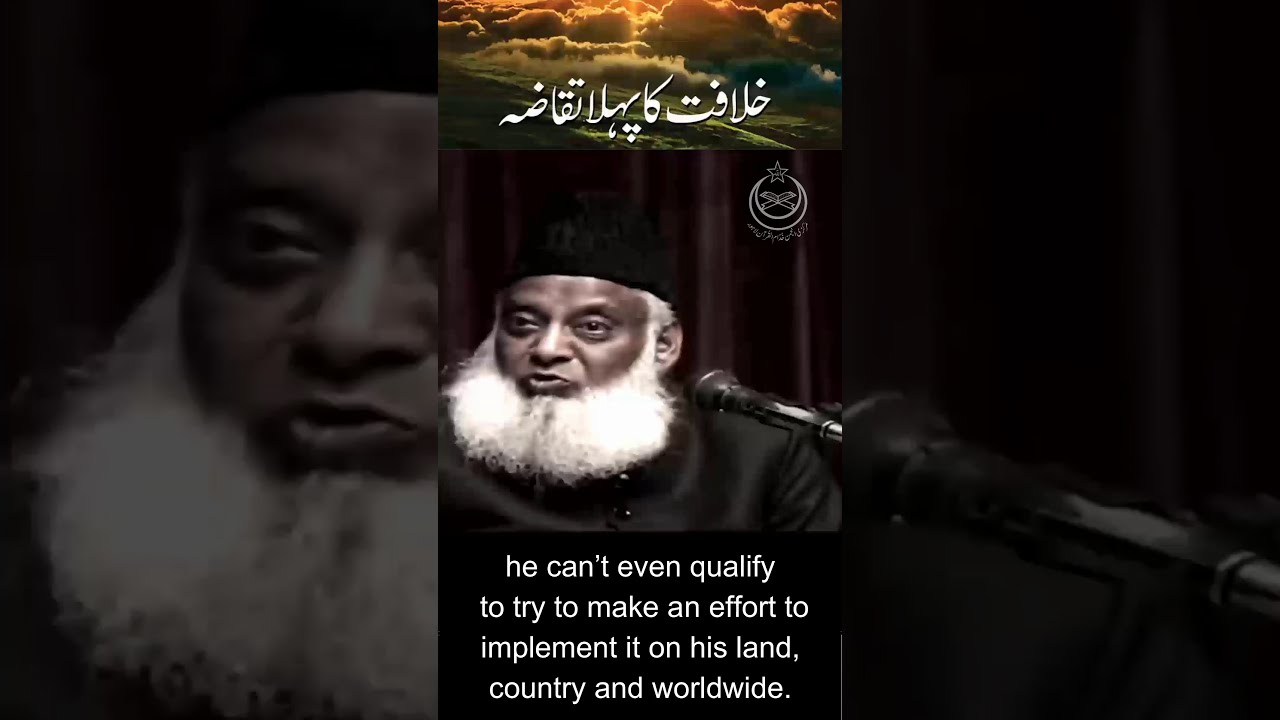
Every individual is a vicegerent of God on Earth. Establishing divine governance begins with self-governance. Humans are entrusted with physical and intellectual capabilities as a divine deposit. The ‘self’—whether termed ego, soul, or *ruh*—is the actual vicegerent on this body, responsible for aligning one's existence, emotions, desires, and aspirations with God’s commands. This personal implementation of divine principles is the foundational requirement of vicegerency for every person.
217
