Shorts
This lecture addresses a critical deviation within the Muslim community, identifying a shift towards Murjiya – a state of complacency where outward claims of faith overshadow genuine inner conviction. It clarifies the distinction between legalistic faith, reliant on outward actions, and true faith rooted in sincere belief and heartfelt certainty. The speaker emphasizes that authentic faith necessitates the inseparable integration of belief and practice, where deeds are not merely supplementary but integral components of a living, breathing faith. The lecture warns against prioritizing outward adherence to rituals over cultivating genuine fear of God and hope for His mercy, advocating for a balanced state between these two essential qualities.

54
This lecture details the immense sacrifices parents make, particularly mothers, during pregnancy and early childhood. It highlights the physical and emotional burdens mothers endure, from carrying the child in the womb for nine months to nurturing and feeding them for two years. The text emphasizes the profound debt of gratitude children owe their parents, both for their care and as a reminder of our ultimate return to God, mirroring the parent-child relationship. It stresses that acknowledging and appreciating parents is a fundamental aspect of faith and righteousness.
66
This lecture explores the concept of *talaawat* beyond mere recitation, emphasizing its true meaning as actively following the Quran's guidance. The speaker explains how beginners often rely on physical aids like fingers to maintain focus while reading. True *talaawat*, however, involves making the Quran one’s leader, adhering to its principles, and seeking its light. This entails complete submission and following its path, as expressed in the prayer for the Quran to be an Imam, a source of light, guidance, and mercy.
53
This lecture emphasizes solely relying on Allah for assistance and rejecting the practice of seeking help from spiritual entities or intermediaries. It asserts that Allah possesses the power to alleviate suffering directly, without requiring the intervention of spirits or angels. The speaker stresses that true solace and resolution come from turning to Allah alone with sincere prayer and supplication, and that Allah can grant relief through any means He chooses, independent of any external agent. The core message is a firm rejection of practices involving seeking help from anything other than the Divine.
63
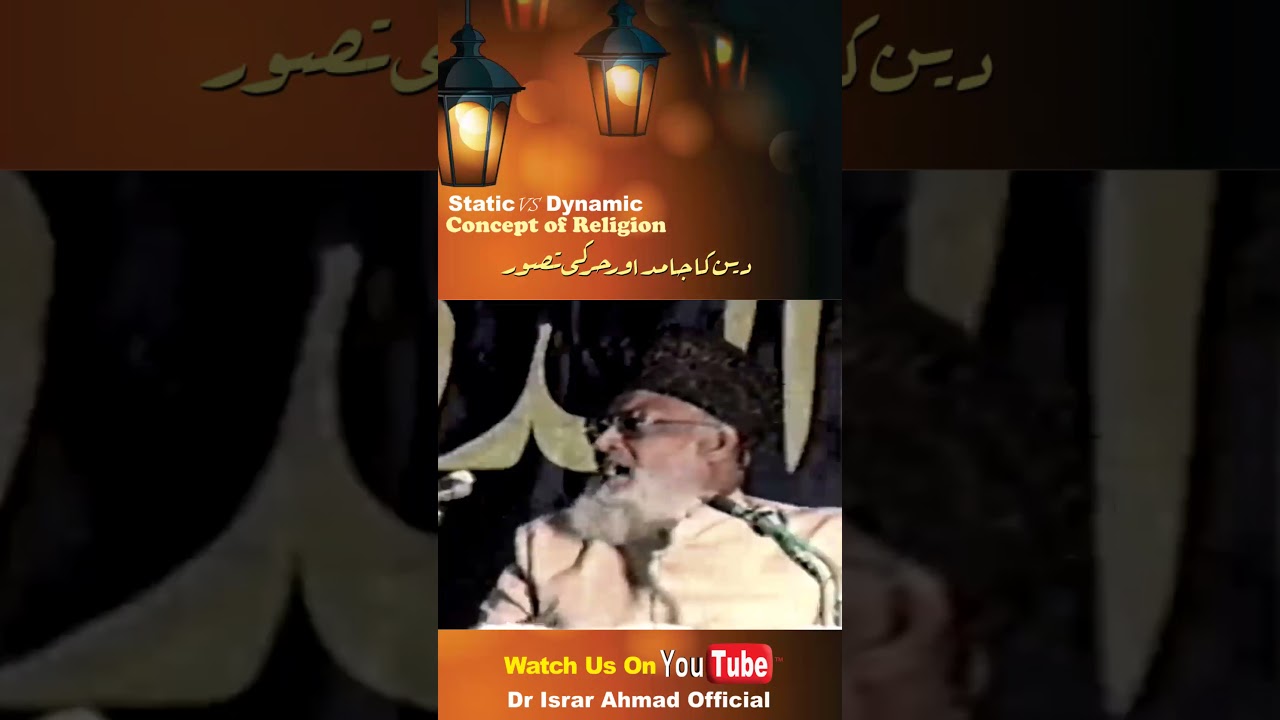
The lecture contrasts two concepts of religion: a static view focused solely on ritual observance, and a dynamic view centered on striving for the dominance of Islam and the betterment of the world. The speaker argues that a truly devout person dedicates their energies to both earning a livelihood and working towards the elevation of Islamic values. One approach limits faith to personal piety, while the other sees it as a driving force for positive change in society. The ultimate purpose of a Muslim’s life, according to this perspective, is to contribute to the glory of Islam.
71

This lecture explores the concept of choosing a difficult, less-traveled path in life as opposed to a broad, popular one. It emphasizes that while the narrow path may be challenging, it ultimately leads to spaciousness and fulfillment. The speaker warns against following the majority who often lead to hardship and emphasizes the importance of choosing a path aligned with spiritual growth and lasting peace. It highlights that true progress lies in embracing difficulty and choosing the less-conventional route.
59
