Shorts
This lecture discusses the historical and economic benefits of sacrificial meat (Qurbani) in a specific region. It highlights how, traditionally, communities utilized every part of the animal, ensuring no waste. The speaker details how this practice provided a livelihood for local herders and a year-round meat supply for residents. The lecture contrasts this sustainable system with modern practices and argues against claims of wastefulness, emphasizing the economic support Qurbani provided to the community. It describes a time when communities thrived due to the efficient use of resources from the sacrificial animals, providing economic stability for local residents and herders. The lecture points out that Qurbani was not merely a religious ritual but a crucial element of the local economy.

102
This lecture addresses the proper way to assist individuals trapped in debt or facing business failure. It emphasizes empowering them to regain financial independence, rather than providing perpetual financial support which perpetuates their dependency. The speaker advocates for strategic assistance that enables individuals to rebuild their lives and become self-sufficient members of the community, particularly within minority groups. The focus is on enabling sustainable recovery, not simply maintaining a state of need.
49
The Urdu language shares a profound connection with Arabic, extending beyond mere vocabulary. The script itself originates from Arabic, and numerous grammatical structures and lexical items are directly borrowed. This linguistic kinship makes learning Arabic particularly advantageous for Urdu speakers, facilitating a deeper understanding of religious texts like the Quran. Despite this inherent connection, sufficient effort hasn’t been directed towards mastering Arabic to directly grasp the Quran’s meaning. The speaker emphasizes the pervasive presence of Arabic-derived words in everyday Urdu speech, highlighting a missed opportunity for intellectual and spiritual enrichment.
63
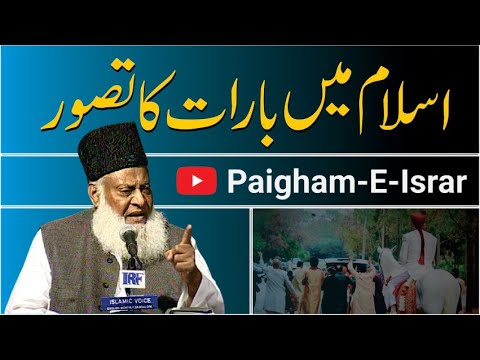
This lecture clarifies that the practice of *barat* (a wedding procession) is not an Islamic tradition. The *nikah* (marriage contract) in Islam is performed in the mosque, without lavish feasts or processions. The historical context reveals that the custom originated from pre-Islamic Hindu traditions, stemming from the need to protect the bride and her dowry during travel between villages. It was a protective measure against bandits, evolving into a large, extravagant procession with feasting and displays of wealth at the groom's home. The example of Prophet Muhammad's daughter, Fatima, demonstrates that even in her marriage to Hazrat Ali, there was no such elaborate procession; rather, a few women accompanied her after the *nikah*. The lecture emphasizes that this practice is a cultural addition, not a religious requirement.
99
This lecture emphasizes the profound importance of showing respect and kindness to parents, especially in their old age. It stresses avoiding any harsh words or dismissive behavior, urging viewers to speak to them with humility, lowered gaze, and utmost reverence. The core message highlights that sincere prayer for their well-being is paramount. It underscores the spiritual reward of caring for aging parents and the detrimental consequences of disrespect.
200
This lecture explains that accountability in the hereafter is based on inherent human faculties: intellect, discernment, the capacity for good and evil, divine knowledge within the soul, and the love of God. Even those who never received a prophetic message will be judged based on these innate qualities. God has provided humanity with the tools for moral reasoning and spiritual awakening, and this internal guidance forms the basis of divine judgment. The sending of prophets and scriptures served to complete the argument and provide clear guidance, making the test of life easier. The soul possesses inherent knowledge of and love for God, which is awakened by divine revelation.
69
