निकर

This lecture details the four characteristics that define a complete hypocrite, and the presence of even one of these traits indicates a degree of hypocrisy. These characteristics are: disloyalty when entrusted, lying when speaking, breaking promises, and losing control during disputes, escalating to abusive language and physical aggression. The speaker explains that true conflict resolution requires self-control and adherence to truthfulness, while the traits of a hypocrite lead to societal breakdown and discord. The lecture emphasizes that even a small amount of hypocrisy can be damaging and requires immediate self-correction.

80

Those close to God experience no fear or grief. Fear stems from what God wills, and even seemingly undesirable events contain hidden benefits. The Quran highlights that what we dislike may be good, and what we desire may be harmful, as God’s knowledge surpasses our own. We perceive only the outward appearance of actions and events, unaware of the divine intention and wisdom behind them. Our vision is limited; we cannot comprehend the ultimate purpose of God. Therefore, we are easily affected by superficial occurrences. True understanding lies in recognizing God’s overarching plan, which remains beyond our immediate perception.
57
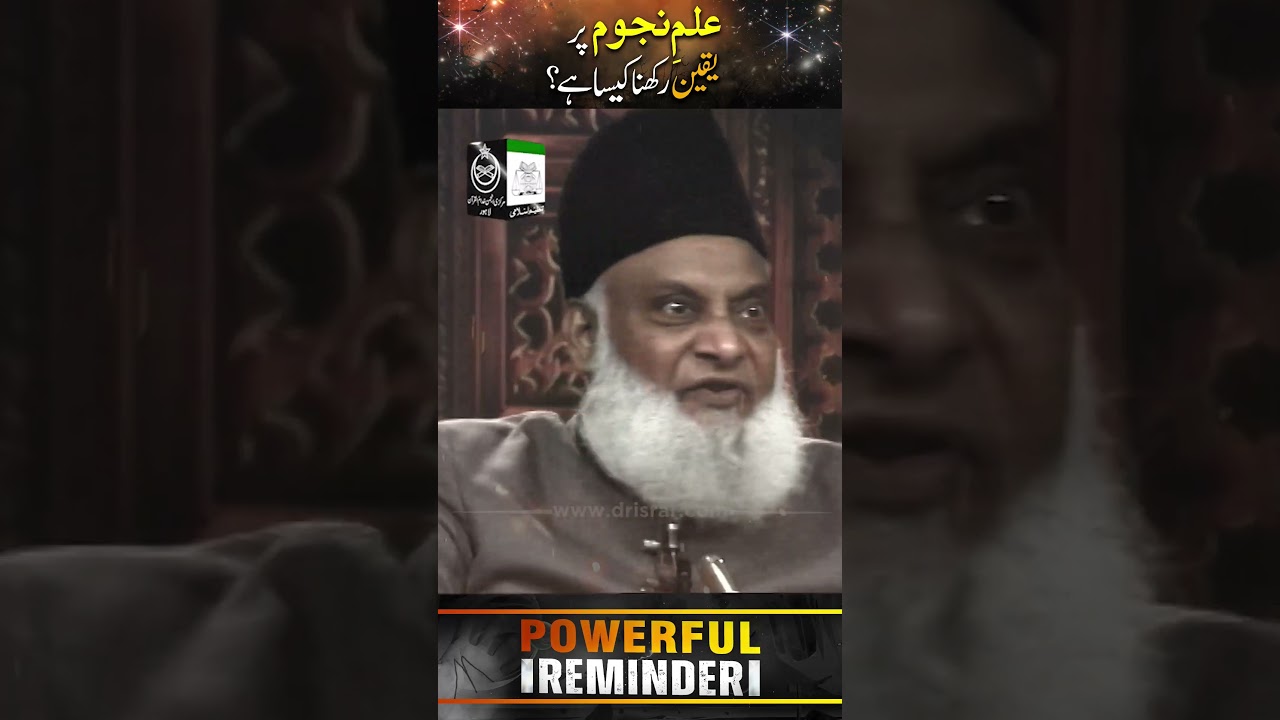
Dr. Israr Ahmad strongly discourages involvement with astrology, palmistry, and similar predictive practices. He asserts that while these systems might contain partial truths, Muslims are explicitly commanded to abstain from them due to the lack of definitive evidence and their potential for misguidance. The lecture emphasizes adherence to established Islamic principles and reliance on divine guidance rather than speculative beliefs. This bayān clarifies the Islamic stance against seeking knowledge of the future through unverified means.
44

Dr. Israr Ahmad discusses the profound period Prophet Muhammad (peace be upon him) spent in the Cave of Hira. He highlights the intense contemplation and spiritual journey undertaken by the Prophet before receiving revelation. The lecture details the Prophet’s questioning of existing beliefs, his rejection of idolatry prevalent in his time, and his search for the true God. It emphasizes that this period of solitude and reflection was crucial in shaping his mission and preparing him for prophethood. The discussion also touches upon the Prophet's inherent inclination towards monotheism and his rejection of the worship practices of Jews and Christians.
100

This lecture explores the human condition as a test between spiritual enlightenment and worldly allure. The metaphor of a moth drawn to a flame represents the soul’s journey. One path leads to divine favor and eternal reward, while the other, captivated by the transient beauty of the world, results in loss. True success lies in prioritizing spiritual truths and the eternal blessings of the afterlife over fleeting worldly pleasures. The core message is a call to self-reflection and a conscious choice towards divine guidance.
80

The capacity to receive and benefit from divine knowledge, specifically the Quran, is directly proportional to one’s mental capacity. Just as a small bucket can only hold a limited amount of water from a vast ocean, a limited mind can only absorb a fraction of the Quran’s wisdom. Expanding mental capacity through the study of sciences, philosophy, and logic is essential to fully grasp the Quran’s teachings. A broad and sharp mind is more receptive to understanding the subtleties and depths of divine knowledge. Continuous learning and intellectual exploration are vital for maximizing one’s capacity to benefit from the Quran's guidance and wisdom.
57
