Korte broek
This lecture examines the decline of the Muslim Ummah due to negligence of religious duties and disregard for the Quran. It draws parallels between the current state and the fate of previous nations who rejected divine guidance, becoming spiritually hardened and ultimately failing to fulfill their potential. The speaker emphasizes that being designated ‘the best of peoples’ carries a responsibility to act upon that status and avoid repeating the mistakes of the past. The hardening of hearts, as described in the Quran, is a critical warning against spiritual apathy and the abandonment of faith. It highlights the importance of internalizing divine teachings and consistently striving for moral and spiritual excellence.

67
Dr. Israr Ahmad explains that a prayer is not accepted if the individual’s sustenance, clothing, and even physical being are derived from unlawful sources. He emphasizes that prayers offered while burdened with sin and sustained by illicit means will not reach God. The lecture details how a person’s entire existence must be purified and aligned with righteousness for their supplications to be answered. The speaker highlights the importance of earning lawful livelihood and abstaining from unlawful sources to ensure the acceptance of prayers.
61
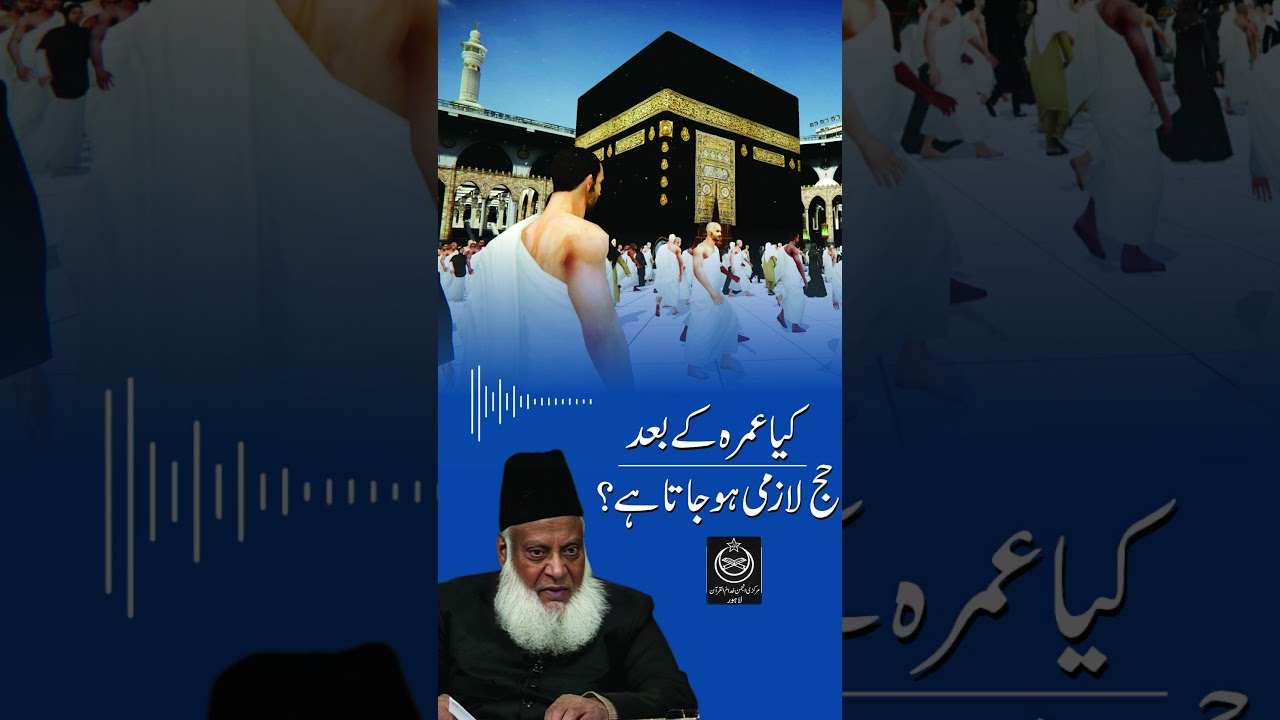
This lecture clarifies whether performing Umrah necessitates performing Hajj. It addresses the scenario of someone performing Umrah while on official government travel, funded by the state, and lacking the financial means for Hajj. The core point is that Umrah itself does not automatically make Hajj obligatory. However, if an individual possesses the financial capability, they should prioritize fulfilling the obligatory Hajj pilgrimage. The lecture emphasizes that if someone can afford to perform Hajj, it becomes an obligation upon them.
85

True faith necessitates prioritizing devotion to God above all else, even familial bonds. This lecture explores the conditions for attaining genuine faith, emphasizing that complete obedience to God is a continuous struggle against internal desires and external temptations. Four fundamental acts of worship are presented as pillars supporting a life of sincerity and devotion. The lecture stresses the difficulty of this pursuit, acknowledging the influence of the self and the constant efforts needed to overcome worldly inclinations. Genuine worship demands a wholehearted commitment, transcending mere ritualistic observance.
64

Despite prevailing hardship and the absence of good news, divine light will ultimately prevail, as Allah will fulfill His purpose regardless of opposition. Allah sent His Messenger with a decisive message: the complete guidance of the Quran. This guidance establishes a just system – a true faith and a complete way of life – intended to triumph over all opposition. The purpose of this message is to establish a just and equitable social order, ensuring the ultimate victory of truth and righteousness.
88
This lecture elucidates the severe consequences of animosity towards a pious individual, or *Wali Allah*. It emphasizes that hostility towards a friend of God is equivalent to declaring war against God Himself. The discussion highlights that true spiritual pain arises from causing hurt to those with sensitive hearts, and that hurting a *Wali Allah* brings shame and disgrace upon an entire community. The lecture stresses that genuine love for God is reflected in compassion and care for His devoted servants, and that inflicting pain on them invites divine retribution. The core message is that harming those close to God brings about spiritual and communal ruin.
59
