Korte broek
The text details the historical origins of sectarian division between Shia and Sunni Muslims, attributing it to Abdullah Ibn Saba, a figure who emerged during the early Islamic period. Ibn Saba is accused of falsely claiming divine status for Hazrat Ali, sparking discord and ultimately laying the foundation for the Shia-Sunni split. He presented himself to Hazrat Ali and his followers, proclaiming him God, and even offered to be burned alive as a test of faith, a claim Hazrat Ali rejected and threatened with punishment. The text asserts this event is the root cause of the ongoing division.

91
This lecture explores the perspective of M.N. Roy, a prominent communist revolutionary, on the historical significance of Islam. Roy, a key figure in the Comintern, recognized the revolution initiated by Muhammad as one of the greatest in human history. He detailed this view in his book, *The Historical Role of Islam*, acknowledging its profound impact on global events. Dr. Israr Ahmad analyzes Roy’s analysis and provides insightful commentary on the topic.
68
Dr. Israr Ahmad strongly discourages involvement with astrology, palmistry, and similar predictive practices. He asserts that while these systems might contain partial truths, Muslims are explicitly commanded to abstain from them due to the lack of definitive evidence and their potential for misguidance. The lecture emphasizes adherence to established Islamic principles and reliance on divine guidance rather than speculative beliefs. This bayān clarifies the Islamic stance against seeking knowledge of the future through unverified means.
44
This lecture discusses the necessity of establishing a system of leadership based on fundamental Islamic principles, particularly in the context of modern times. The speaker argues that while the prophetic era has ended, the need for guidance and just governance remains. He emphasizes the importance of adhering to core Islamic tenets while adapting detailed structures to the demands of the present age. The lecture stresses the need for a leader to resolve disputes and maintain unity within the community, drawing parallels to the practice of appointing an ameer during journeys. The speaker identifies as a fundamentalist, meaning one who upholds Islamic principles, while acknowledging room for differing interpretations in detailed matters.
54

This lecture explores the incomplete nature of the Prophet Muhammad’s mission, asserting that the complete prevalence of the Divine religion across the entire world is a prerequisite for the Day of Judgement. It details how, while significant portions of Arabia were illuminated by the light of monotheism during the Rashidun Caliphate, vast regions including China, India, Europe, and much of Africa remained untouched. The speaker emphasizes that until the entirety of the earth embraces the Divine message, the Prophet’s ultimate objective remains unrealized, highlighting the continuous need for striving and dedication towards its completion.
56
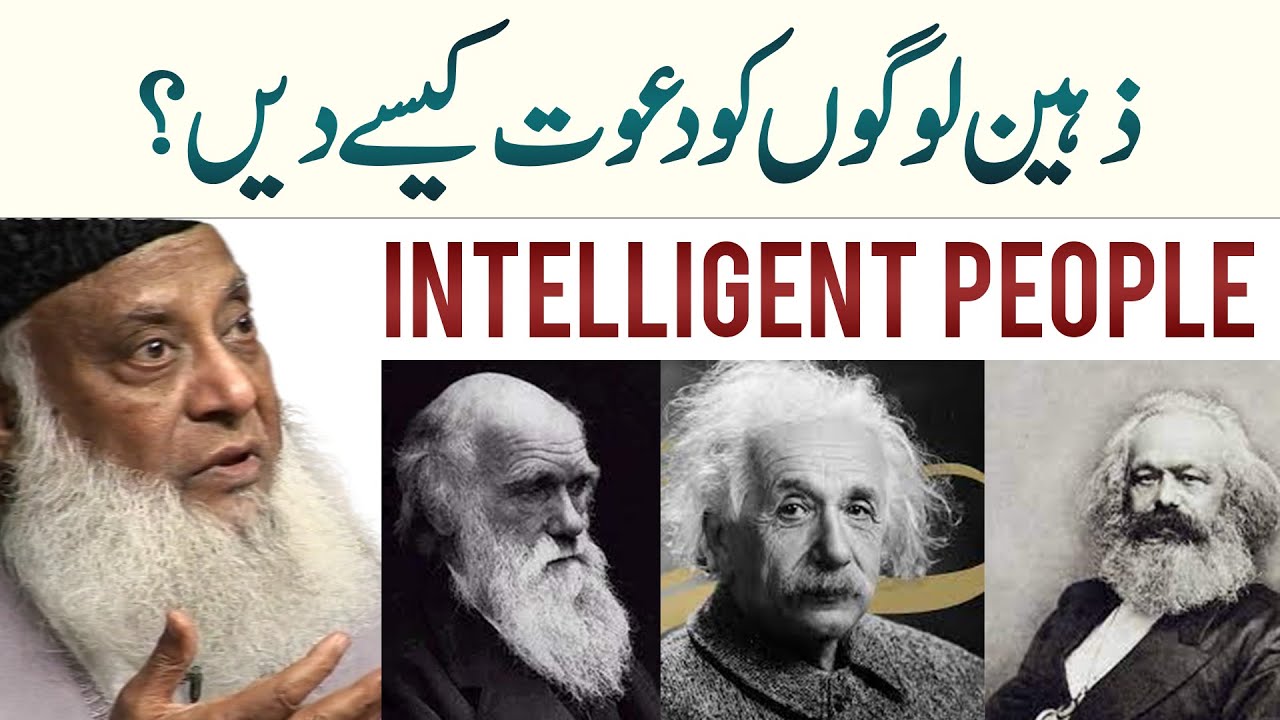
The lecture addresses the necessity of clearing the mind of conflicting ideologies, specifically Darwinian evolution and other Western philosophies, before accepting Islamic teachings. The speaker emphasizes that preconceived notions and intellectual impurities act as barriers to true understanding of religious concepts like the story of Adam and Iblis. He critiques the influence of thinkers such as Darwin, Freud, Marx, Adler, Bertrand Russell, and Sartre on contemporary thought, asserting that these philosophies obstruct a clear reception of Islamic principles. The speaker highlights the importance of intellectual purification to facilitate genuine faith and understanding.
60
