Shorts
This lecture asserts that true sovereignty rests solely with God, rejecting the concept of human or national governance. It emphasizes that ownership, in its entirety, belongs to God, with all possessions – including one’s own body and progeny – being held in trust. The discussion refutes any form of human rule, whether individual kingship, national dominion, or popular sovereignty, deeming them forms of associating partners with God. The speaker stresses that God, or His appointed representatives, are the sole law-givers, and true authority emanates only from the Divine.

71
This lecture addresses the complex situation when parental demands conflict with divine commands in Islam. It clarifies that while parents hold a significant position of respect and obedience immediately after God, God’s commands take precedence. The speaker emphasizes that a son or daughter should respectfully but firmly explain their limitations, drawing parallels to the example of Prophet Ibrahim (Abraham), and avoid yielding to demands that involve disobedience to God. Maintaining respectful communication and soft persuasion are encouraged, but unwavering adherence to God’s commands is paramount.
59
This lecture explains that the night of Decree (Laylat al-Qadr) is when the measures and destinies for the upcoming year are determined. While these decrees exist within Allah's eternal knowledge, the specifics of their manifestation – events, circumstances, and incidents – are communicated to the angels for execution. This process occurs annually, mirroring a budgetary session where yearly affairs are assigned. The lecture highlights that Allah's ancient knowledge encompasses all that will occur, and the angels are tasked with bringing these divine decisions to fruition.
65
The Quran is presented as the direct connection, or ‘rope,’ between Allah and humanity. It’s the primary means of achieving nearness to Allah. This connection is twofold: one end is within our grasp, allowing us to act upon its guidance, while the other end is held by Allah, signifying divine support and blessing. The lecture emphasizes that the Quran is not merely a book, but a living pathway to spiritual closeness with Allah, offering guidance and facilitating a deep, personal relationship with the Divine.
135
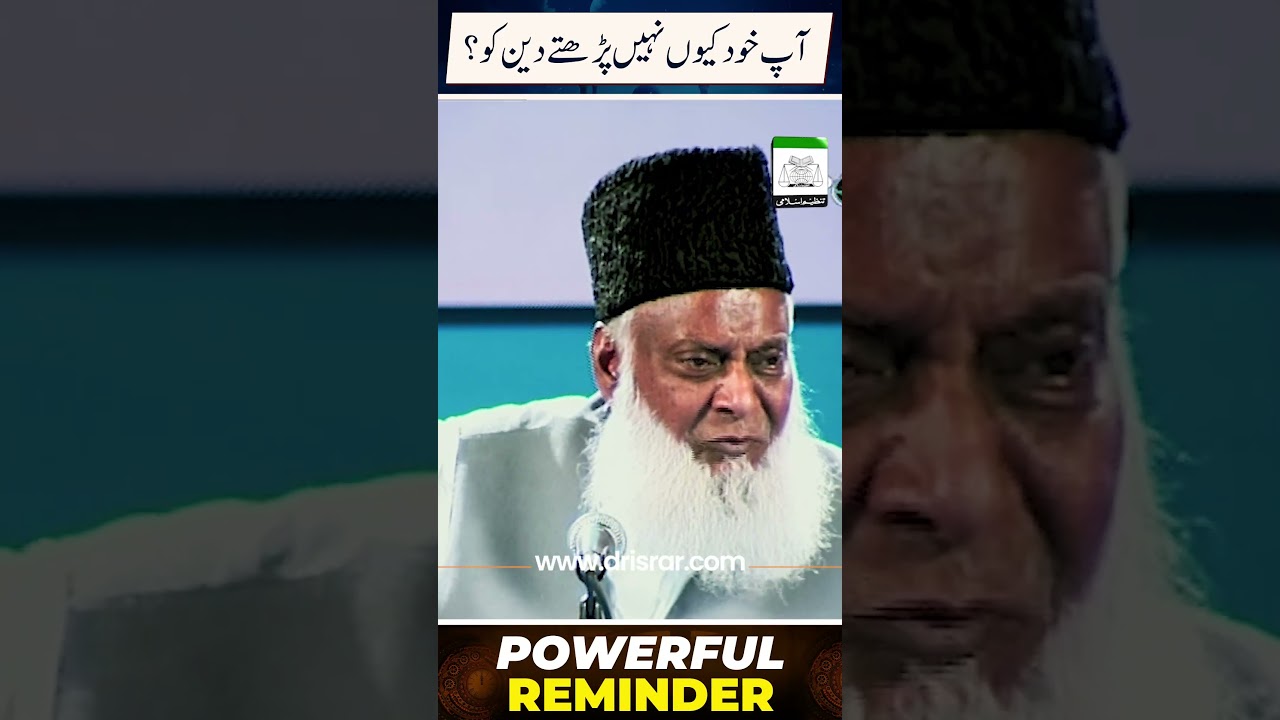
This lecture critiques the societal trend of prioritizing worldly education and careers over religious knowledge and practice. It argues that every Muslim should be capable of performing essential religious duties like leading prayers and conducting marriage ceremonies. The speaker challenges the audience to self-reflect and examine their own commitment to Islamic principles rather than criticizing religious scholars. The lecture highlights a shift in priorities towards material success and away from spiritual development, questioning why individuals pursue professions that offer wealth and status while neglecting religious obligations. It emphasizes that true religious understanding comes from personal devotion and not solely from professional clerics.
64

This lecture emphasizes the importance of financial moderation, differentiating between frugality and extravagance. Extravagance is considered more detrimental than miserliness, defined as unnecessary expenditure beyond genuine need. The speaker cites the example of simple sustenance—bread and a single dish—as sufficient, contrasting it with excessive displays of food. The lecture strongly condemns wasteful spending motivated by showing off wealth, such as lavish homes with excessive electricity consumption, labeling it a grave sin. The core message promotes a balanced approach to spending, prioritizing necessity over ostentation.
48
