شلوار کوتاه
This lecture explores the concept of divine uniqueness, emphasizing that God is free from any partners, progeny, or need for support. It highlights the attributes of God as the sole sovereign, creator, and sustainer of the universe, deserving of all praise and magnification. The discussion centers on the affirmation of God’s absolute oneness and transcendence, rejecting any form of association or limitation to His divine essence. It underscores the importance of recognizing God's perfect attributes and submitting to His will.

54
This narrative recounts an instance where the Prophet Muhammad (PBUH) requested to use an camel owned by Hazrat Abu Bakr. Hazrat Abu Bakr, overjoyed, offered the camel as a gift, having prepared it specifically for the journey. The Prophet insisted on paying for it. Hazrat Abu Bakr, moved to tears, expressed that his life and possessions were already dedicated to the Prophet, and offering the camel without payment was a matter of honor. This demonstrates the Prophet’s integrity and Hazrat Abu Bakr’s profound devotion and generosity.
49
Humanity has descended to an animalistic level, disconnecting from its inherent spiritual nature. Individuals have ceased to perceive, reflect, and truly listen, relying instead on base instincts. While endowed with a divine spark and soul, modern humans, particularly influenced by Darwinian thought, now identify solely with their biological existence. This ideology, initially confined to biology and largely discredited there, has permeated the social sciences, leading to a loss of awareness of the divine element within. This lecture explores the consequences of this spiritual decline and the importance of reclaiming our inherent humanity.
66
Islamic principles dictate that the financial responsibility for a wedding lies with the groom’s family, not the bride’s. Marriage is a necessity for both men and women, completing each other’s lives. The mahr, or dower, is paid by the groom to the bride, symbolizing his commitment and responsibility. It is not a price for the bride, nor a purchase, but a token of commitment and a recognition of her value. Mahr can be determined in various forms, including goods, services, or the commitment to teach the bride Quran. It represents the man's capability to fulfill his obligations and the woman’s acceptance of this commitment.
87
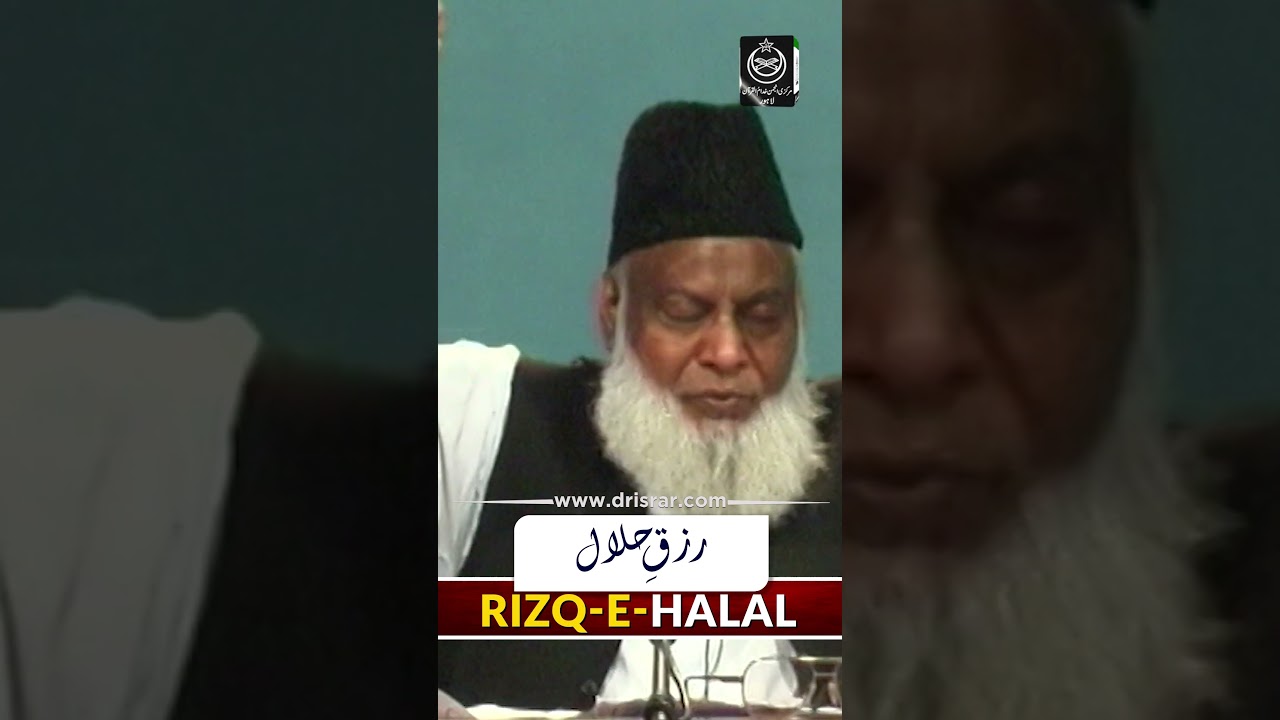
Dr. Israr Ahmad explains that a prayer is not accepted if the individual’s sustenance, clothing, and even physical being are derived from unlawful sources. He emphasizes that prayers offered while burdened with sin and sustained by illicit means will not reach God. The lecture details how a person’s entire existence must be purified and aligned with righteousness for their supplications to be answered. The speaker highlights the importance of earning lawful livelihood and abstaining from unlawful sources to ensure the acceptance of prayers.
61
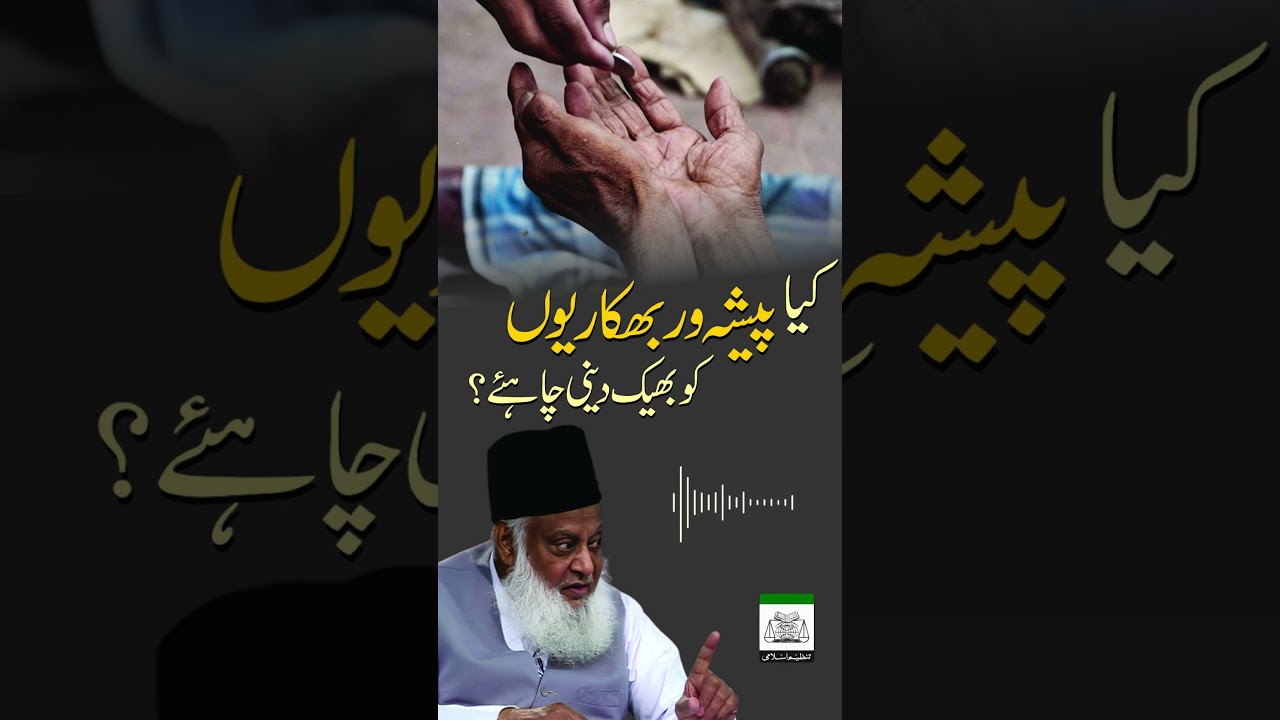
Dr. Israr Ahmad argues against giving money to professional beggars, stating it perpetuates a harmful system and discourages genuine charity. He emphasizes identifying and directly supporting those truly in need within one’s community, advocating for delivering aid to their homes rather than enabling begging. He asserts that supporting beggars inadvertently funds an institution of exploitation and makes those who do so complicit in a societal ill. True charity, he explains, involves identifying genuine need and providing direct assistance.
55
