السراويل القصيرة

Everything in the heavens and the earth glorifies Allah. While remembrance and praise are fundamental acts of worship, humanity—especially those entrusted with stewardship of the earth—is called to a higher purpose. True faith demands action: striving to establish divine guidance and elevate the word of God. Believers must move beyond mere declaration of faith to actively work towards the triumph of God’s message. This entails dedication and sacrifice in upholding and promoting the principles of Islam.

57

The Prophet Muhammad (peace be upon him) relayed a divine tradition: every act of worship benefits the individual, except fasting. Fasting is exclusively for God, and He alone will reward it directly. This emphasizes the unique nature of fasting as an act of devotion solely directed towards God, differing from other acts of worship where benefits are also reaped by the worshipper. It highlights the direct connection between the fasting person and God, and the certainty of divine recompense. The core message focuses on revitalizing the human spirit and strengthening its connection with the Divine.
54

The observance of fasting on the 9th and 10th of Muharram is a recommended practice, not obligatory. This practice originated when the Prophet Muhammad learned that the Jews of Medina fasted on the 10th of Muharram to commemorate their deliverance from Pharaoh. The Prophet stated that the Muslims have a greater right to Moses than the Jews, and thus instructed his companions to fast on the 9th and 10th of Muharram instead, to differentiate their practice. This was done even before Ramadan fasting was made obligatory. The intention was to establish a distinct practice, fasting for two days instead of one.
74

This lecture discusses the story of Adam (peace be upon him) and his repentance after disobeying Allah's command. It highlights the acceptance of his repentance and the subsequent decree that Earth is his domain and that of his descendants. The lecture emphasizes the importance of following divine guidance when it is revealed, and the consequences of rejecting it. It explains that Adam’s progeny are tasked with upholding this divine trust and that accepting guidance leads to security and salvation. The core message centers on forgiveness, the purpose of human life on Earth, and the perpetual need to seek and adhere to divine direction.
58

Everything in the heavens and the earth glorifies Allah. While praising Allah is essential – as even inanimate objects and plants do – humanity, granted stewardship of the earth and divine favor, is obligated to do more. True faith demands action: actively striving to establish divine guidance and elevate the word of God. Simply reciting praise is insufficient; believers must demonstrate their commitment through dedicated effort and sacrifice to make God’s will prevail. The core requirement of faith in God is not just glorification, but actively working to establish His dominion and uplift His message.
58
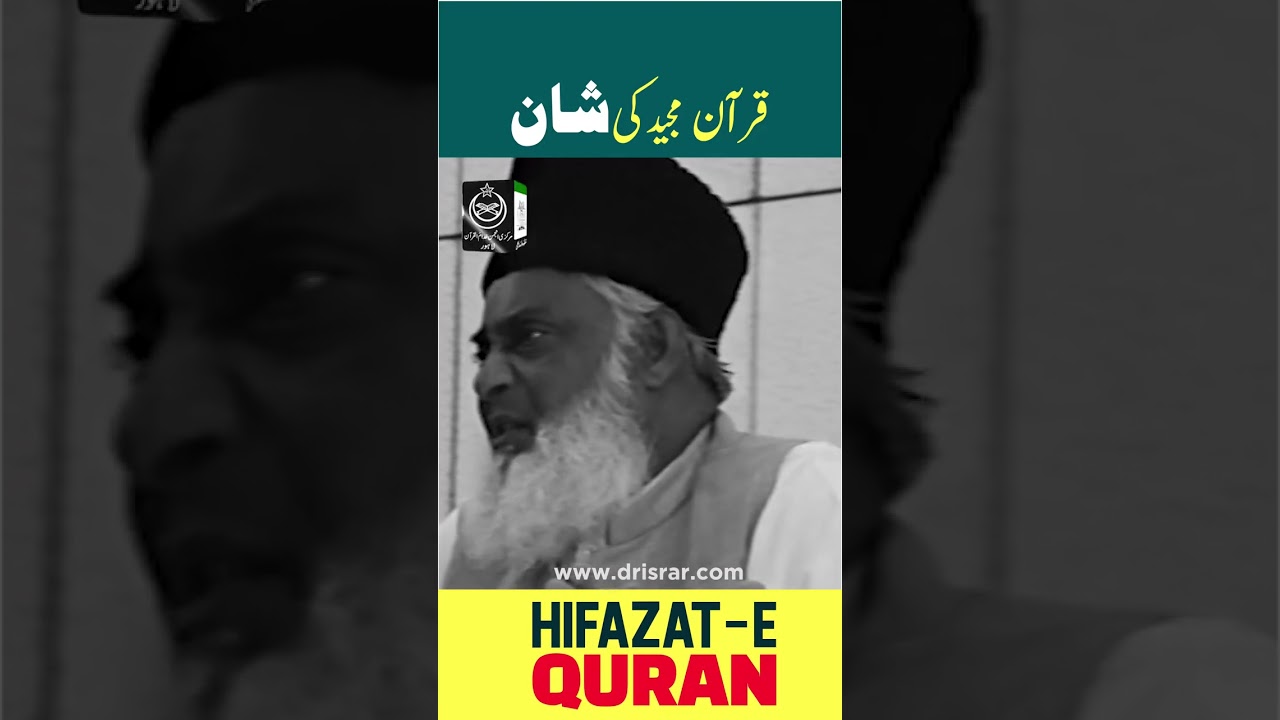
The Quran is uniquely preserved compared to all other texts. The world’s scholars acknowledge this fact. Every letter and pronunciation within the various recorded recitations – Sab’a Qira’at and ‘Ashara Qira’at – is meticulously documented, detailing even the use of *zabar* or *zir* for each word. The official text was standardized by Hazrat Uthman (RA), a significant service to the Muslim community. This preservation extends to the precise documentation of variations in recitation, ensuring the integrity of the divine text.
65
