Shorts
The verse from Surah Ma'idah highlights Satan’s primary tactic: sowing discord and animosity between people. This disruption extends to fracturing familial and marital bonds, leading to the disintegration of entire social structures. A hadith recounts Satan praising a demon for successfully creating strife between a husband and wife, recognizing its devastating impact on the family unit and, consequently, society. The creation of enmity and discord is presented as Satan's most effective weapon against humanity and its social cohesion.

77
The lecture clarifies that the blessings of Laylat-ul-Qadr (the Night of Power) are not limited to the night itself, but extend to the following day. The Quranic use of terms like ‘yom’ (day) and ‘layl’ (night) encompasses the full 24-hour cycle. This means the entire day following Laylat-ul-Qadr shares in its spiritual significance. This resolves a potential issue regarding time zones; the blessings are universally available regardless of geographical location, ensuring no part of the Earth is excluded from this divine blessing. The lecture emphasizes the Quran’s comprehensive nature, leaving no aspect untouched by divine grace.
86
Science and technology are rapidly advancing. This lecture addresses the permissibility of utilizing advancements, distinguishing between those aligned with Islamic principles (Kitab o Sunnat) and those that are neutral. It emphasizes that progress benefiting humanity should be embraced, while innovations contradicting core Islamic values should be rejected. The lecture posits that human progress is a collective inheritance, not the property of any individual, and should be guided by ethical considerations rooted in faith. Neutral advancements, permissible within an Islamic framework, can be adopted and integrated into society.
83

This lecture explores the multifaceted greatness of the Prophet Muhammad (peace be upon him). It highlights his exceptional qualities not merely as a human being, but also as a strategic leader and diplomat. The discussion focuses on his unparalleled skill in military strategy, despite never personally participating in battle, and his mastery of negotiation and conflict resolution. The lecture details his ability to forge alliances and unite diverse groups, exemplified by the agreements he established in Medina and previously in Yathrib, demonstrating his profound leadership and wisdom.
86
This lecture emphasizes the importance of humility and righteous actions as essential components of faith. True believers do not boast or consider themselves superior. Instead, they recognize themselves as part of the larger Muslim community and maintain a humble disposition. Just as a fruit-laden branch bends low, those blessed with good deeds should exhibit modesty. Condescension towards others negates the impact of one's message. The speaker advocates for hating sin, not the sinner, recognizing that individuals struggling with wrongdoing are in need of compassion and treatment, not condemnation. True believers show empathy and understanding towards those who err, understanding them as patients in need of care.
54
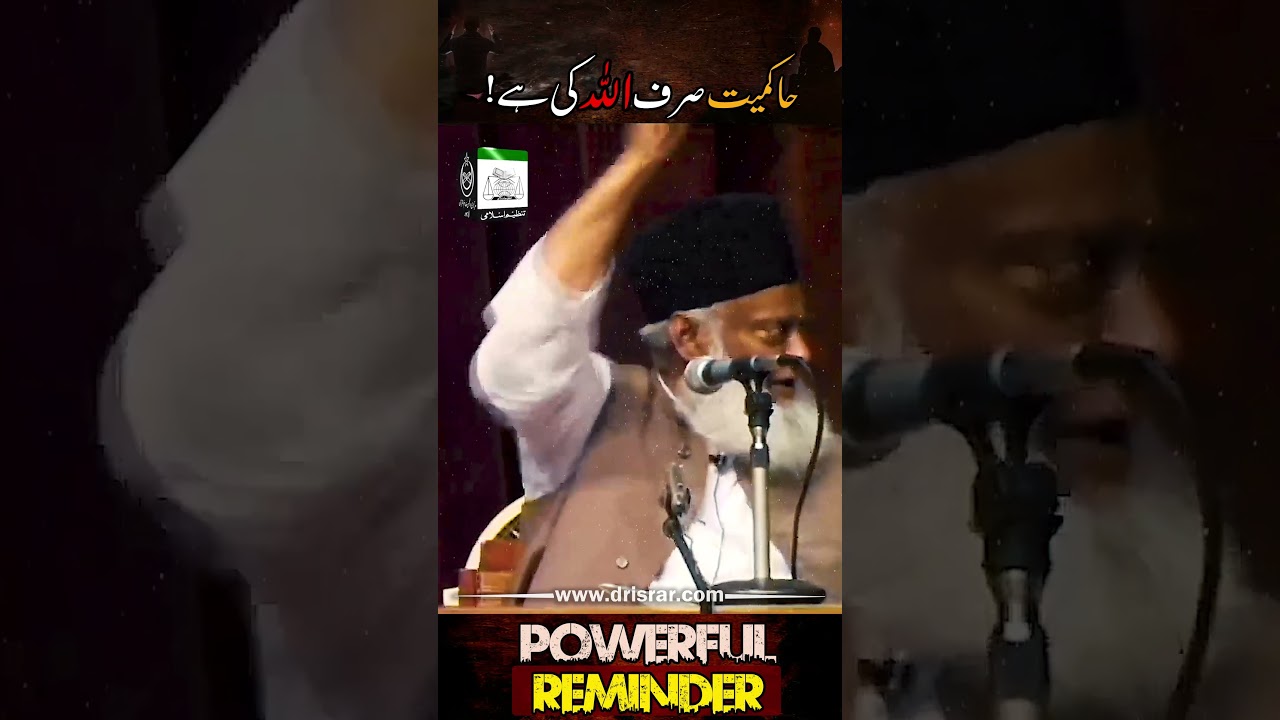
This lecture asserts that true sovereignty rests solely with God, rejecting the concept of human or national governance. It emphasizes that ownership, in its entirety, belongs to God, with all possessions – including one’s own body and progeny – being held in trust. The discussion refutes any form of human rule, whether individual kingship, national dominion, or popular sovereignty, deeming them forms of associating partners with God. The speaker stresses that God, or His appointed representatives, are the sole law-givers, and true authority emanates only from the Divine.
71
