Shorts

Shirk fi zāt, considered the most egregious form of polytheism, involves associating partners with God's very essence. This belief, tragically prevalent amongst some communities claiming Abrahamic lineage, manifests as attributing offspring to God. The argument posits that just as offspring inherit traits from parents, a divine 'offspring' would necessarily share God's attributes, thereby equaling God. This concept fundamentally contradicts the absolute uniqueness and transcendence of God, and is a severe transgression. It represents the ultimate in associating partners with God, exceeding even the worship of idols.

70
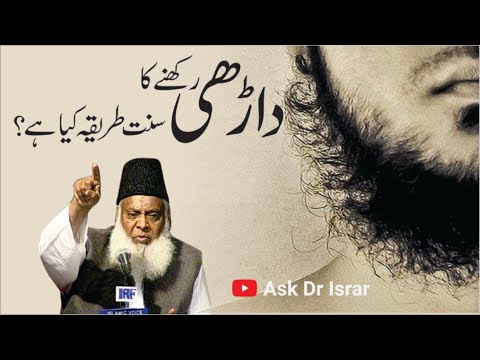
This lecture clarifies the Islamic rulings regarding beards and mustaches. It states that growing a beard is a Sunnah, and interfering with its natural growth is discouraged. Trimming for balance is permissible if growth is uneven. Shaving the beard completely or excessively is considered a greater sin than not growing one at all. The lecture emphasizes that adhering to these practices is considered obligatory by some scholars, as it aligns with the teachings and practices of the Prophet Muhammad (peace be upon him).
80
Dr. Israr Ahmad explains that a prayer is not accepted if the individual’s sustenance, clothing, and even physical being are derived from unlawful sources. He emphasizes that prayers offered while burdened with sin and sustained by illicit means will not reach God. The lecture details how a person’s entire existence must be purified and aligned with righteousness for their supplications to be answered. The speaker highlights the importance of earning lawful livelihood and abstaining from unlawful sources to ensure the acceptance of prayers.
61
Dr. Israr Ahmad discusses the remarkable correspondence between the Quran and modern scientific discoveries, specifically in the field of embryology. He recounts the story of a French surgeon, Maurice Bucaille, who, after being treated by King Faisal of Saudi Arabia, was presented with the Quran. Bucaille learned Arabic, studied the Quran, and ultimately wrote a book confirming that no scientific fact within the Quran had been proven false. He acknowledged that science may not yet have fully understood all of the Quran’s truths, but that no established scientific principle contradicts its teachings.
58
This lecture explores the connection between faith in God and the absence of fear and grief. It argues that true belief manifests as inner peace and confidence, even in the face of adversity. The speaker emphasizes that a troubled heart indicates a lack of complete trust in God’s sovereignty. Experiencing peace and freedom from anxiety are considered concrete proofs of genuine faith and a solidified connection with the Divine. The lecture highlights that reliance on God is the only path to overcoming these negative emotions and achieving true contentment.
69
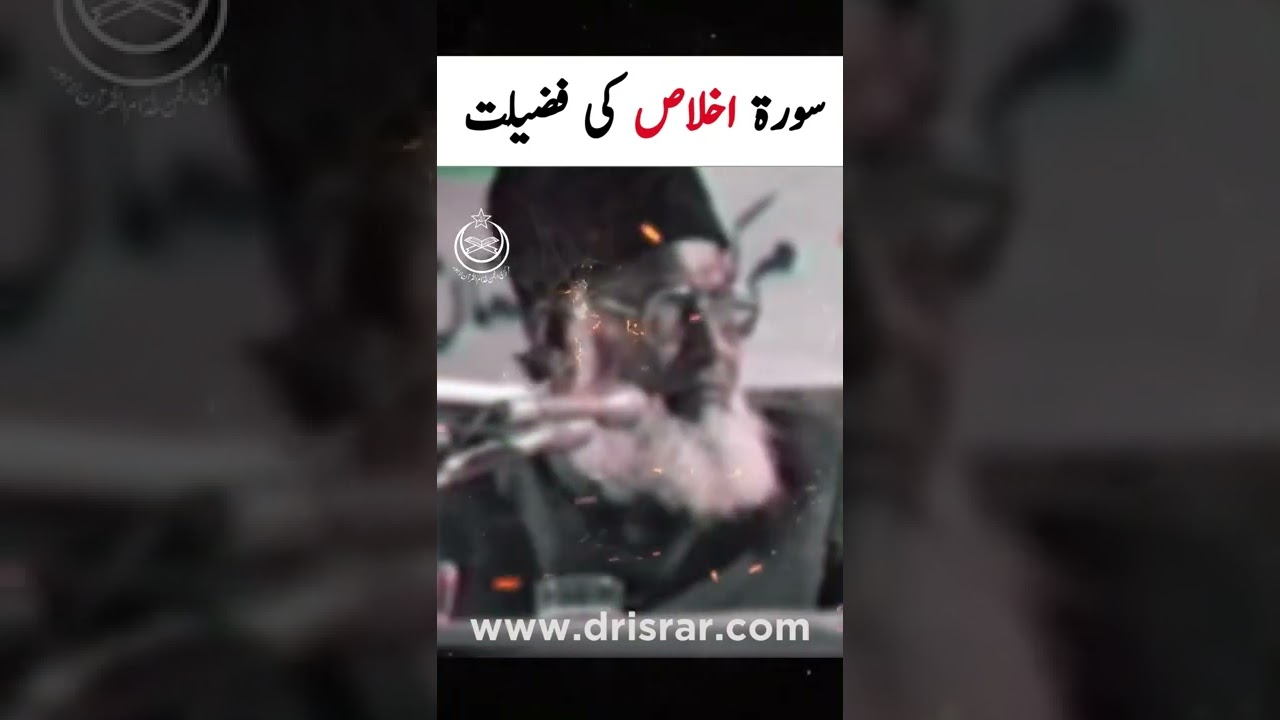
Surah Al-Ikhlas is considered the most important surah in the Quran due to its comprehensive articulation of Tawhid (the Oneness of God). While comprising only four verses, it’s equivalent to one-third of the Quran in significance. This is because the foundation of Islam is Tawhid, and Surah Al-Ikhlas encapsulates this concept in its purest form, making it the core root of the faith. Dr. Israr Ahmad explains this foundational concept with clarity and depth.
59
