شارٹس
This lecture explores the boundless power and knowledge of Allah. It emphasizes humanity's limited capacity to fully comprehend divine attributes. The speaker highlights the vastness of creation, from the Earth to the galaxies, and how our understanding falls short. The discussion centers on recognizing Allah’s absolute power while acknowledging the limits of human perception and intellect. It asserts that while we cannot measure Allah’s attributes, we can perceive His signs and become grateful worshippers. The lecture underscores the importance of acknowledging Allah’s greatness and submitting to His will.

63
This lecture addresses the dangers of linguistic and cultural biases, clarifying that regional, ethnic, and linguistic identities are not inherently sinful. It emphasizes that every culture and language has a right to flourish, provided any elements conflicting with Islamic teachings are removed. The lecture highlights the unique status of the Arabic language not due to its speakers, but because it is the language of the Quran and the sayings of the Prophet Muhammad, making its study essential for direct understanding of religious texts. It cautions against exclusionary attitudes based on language or culture, likening such behavior to a useless tool.
70
This lecture clarifies that the ultimate abode, the Hereafter, is reserved for those who abstain from seeking power, dominance, or creating corruption in the world. It emphasizes that this eternal reward is specifically for the righteous – those who prioritize piety and refrain from worldly ambitions. The final outcome and ultimate success are assuredly for the God-conscious, and Allah has exclusively designated its blessings, joys, and comforts for His devout servants.
60
This lecture explores the concept of divine guidance and its profound impact on human life. It emphasizes that success and righteousness are not achieved through personal effort alone, but are gifts from God. The speaker highlights the importance of recognizing God's favor and the potential for life to drastically change with even the smallest deviation. It underscores that all praise and gratitude belong to God, who bestows guidance and directs individuals toward the right path. The lecture serves as a reminder of God's grace and the need for constant acknowledgment of His blessings.
78
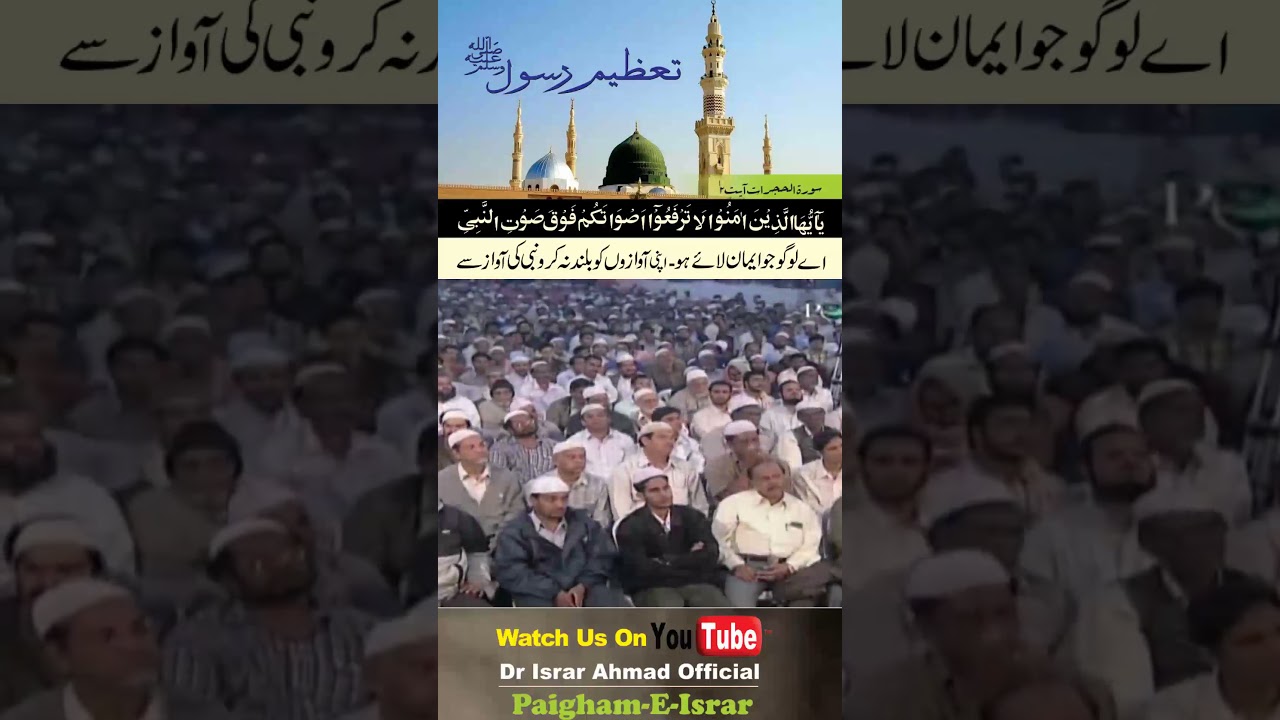
This lecture emphasizes the importance of respectful communication, particularly when discussing religious figures or sacred texts. It cautions against raising one’s voice in the presence of scholarly discussion or when referencing the sayings and actions of the Prophet Muhammad. The speaker stresses immediate silence when a tradition (hadith) is mentioned, prioritizing verification of its authenticity later. Disrespectful discourse is equated with diminishing the value of religious teachings and the Prophet’s legacy, demanding a mindful and humble approach to conversation.
69
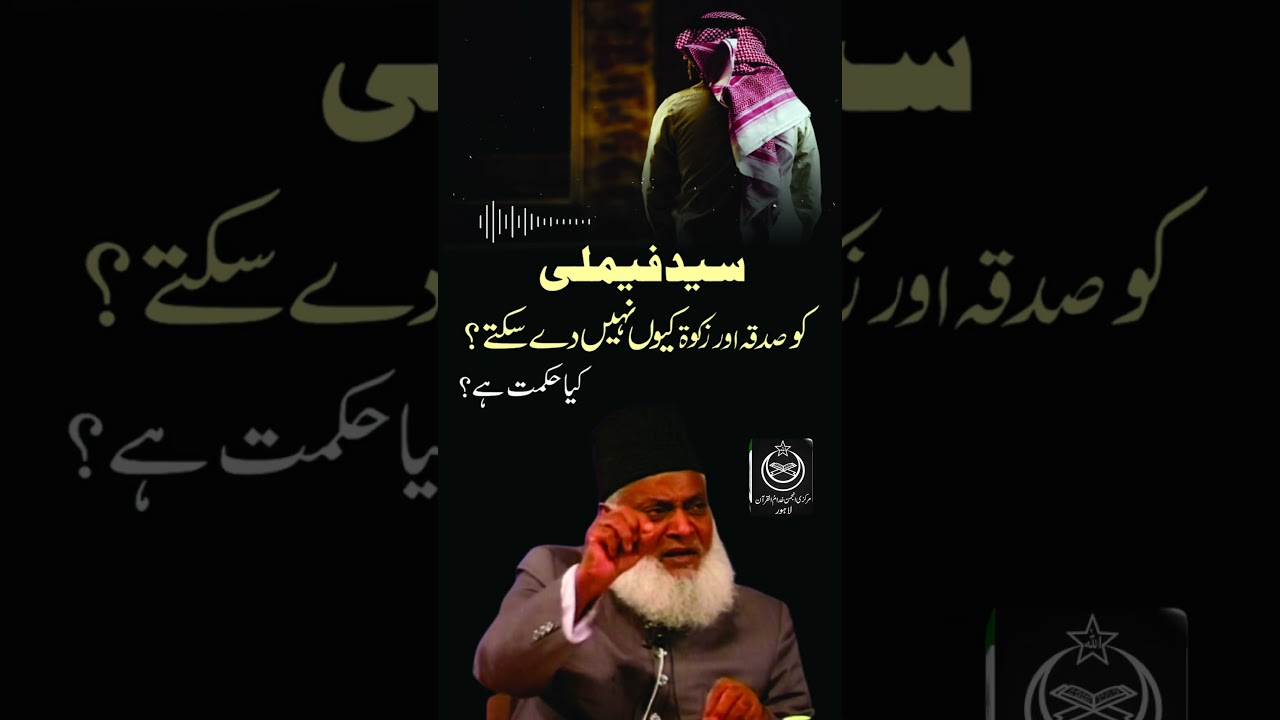
Dr. Israr Ahmad explains the profound wisdom behind the Prophet Muhammad's (peace be upon him) decision to refrain from accepting charity (sadqa) or Zakat for himself and his household. This ensured that the benefits reached those truly in need – the poor and deserving. He emphasizes that wealth carries obligations beyond just Zakat, encouraging additional support for those less fortunate. The speaker repeatedly highlights that wealth carries responsibilities beyond the obligatory Zakat and encourages providing aid beyond it.
113
